Whispers of Eternity: A Journey Through Varanasi
December 24, 2025
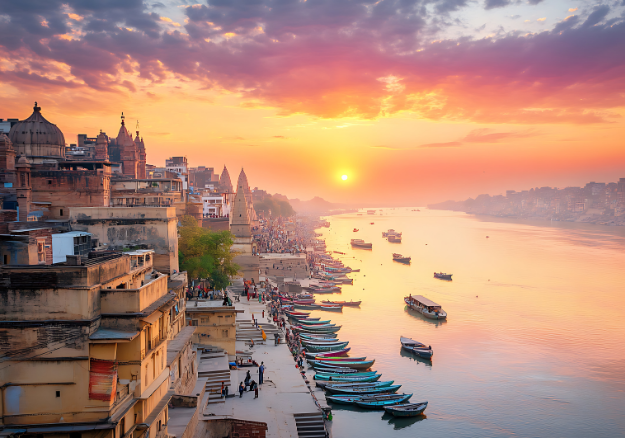
Whispers of Eternity: A Journey Through Varanasi
Varanasi does not introduce itself gently. It does not wait for you to adjust, to understand, or to feel comfortable. Instead, it overwhelms you—through sound, scent, devotion, color, and contradiction. The moment you step into this ancient city, you realize that Varanasi is not merely a destination you visit; it is an experience that visits you, stays with you, and quietly reshapes the way you look at life and death.
Often called Kashi, Banaras, or Varanasi, this sacred city on the banks of the River Ganga is believed to be the oldest continuously inhabited city in the world. Yet, despite its age, it feels intensely alive. Here, eternity whispers through every ghat, every chant, every flickering diya floating on the river at dusk.
This is a journey through Varanasi—not just through its streets and ghats, but through its soul.
The Eternal City: Understanding Varanasi’s Spirit
In Hindu belief, Varanasi is the city of Lord Shiva, the destroyer and transformer. It is said that those who die here are liberated from the endless cycle of rebirth, attaining moksha, or salvation. This belief alone shapes the city’s atmosphere. Death here is not feared or hidden—it is accepted, ritualized, and revered as a natural transition.
Unlike modern cities that race toward the future, Varanasi seems rooted in the present while carrying the weight of thousands of years on its shoulders. Time flows differently here. The past and present exist side by side—smartphones capture ancient rituals, while centuries-old chants echo through streets lined with electric wires and neon signs.
This coexistence of the timeless and the contemporary is what makes Varanasi profoundly unique.
The Ghats: Stone Steps into Eternity
The heart of Varanasi beats along its ghats—a series of stone steps leading down to the Ganga. There are more than 80 ghats, each with its own story, purpose, and personality.
Dashashwamedh Ghat
The most vibrant and energetic ghat, Dashashwamedh is believed to be the place where Lord Brahma performed ten horse sacrifices. From early morning to late night, it buzzes with priests, pilgrims, boatmen, tourists, and sadhus. It is also where the famous Ganga Aarti takes place every evening—a powerful spectacle of fire, rhythm, and devotion.
Manikarnika Ghat
Perhaps the most intense and thought-provoking place in Varanasi, Manikarnika Ghat is one of the city’s main cremation grounds. Here, funeral pyres burn day and night. Watching the rituals unfold is a deeply humbling experience. There is no drama, no spectacle—only quiet acceptance. Life ends here, but eternity begins.
Assi Ghat
Located at the southern end, Assi Ghat is calmer and more relaxed. It attracts students, travelers, and locals alike. Morning yoga sessions, classical music performances, and serene sunrises make this ghat a peaceful counterpoint to the city’s chaos.
Walking along the ghats at dawn, when the city is just waking up, feels almost meditative. Bells ring softly, priests chant mantras, and the river glows with the golden hues of sunrise.
The Sacred River: Ganga as Mother and Witness
The River Ganga is not just a river in Varanasi—it is a living goddess, a mother, a purifier of sins. Millions come to bathe in her waters, believing that a dip can cleanse lifetimes of karma.
From a practical lens, the river faces challenges—pollution, overcrowding, and environmental strain. Yet spiritually, the faith in Ganga remains unshaken. People drink her water, offer prayers, and immerse ashes of loved ones into her currents with complete trust.
A boat ride on the Ganga is one of the most moving ways to experience Varanasi. As you drift past the ghats, you witness life unfolding in its rawest form—children playing, priests performing rituals, families praying, and funeral pyres burning in quiet dignity.
Ganga Aarti: Devotion in Motion
As evening descends, Dashashwamedh Ghat transforms into a spiritual theatre. The Ganga Aarti begins just after sunset, and thousands gather to witness it.
Young priests dressed in saffron robes move in perfect synchronization, holding massive oil lamps, incense burners, and conch shells. The air fills with chants, bells, and the rhythmic beat of drums.
As hundreds of small diyas float away on the river, carrying whispered prayers, it feels as though the Ganga herself is listening.
Temples of Faith: Where Gods Reside Among Humans
Kashi Vishwanath Temple
Dedicated to Lord Shiva, this is the most sacred temple in Varanasi. One of the twelve Jyotirlingas, it holds immense religious significance.
Sankat Mochan Hanuman Temple
Founded by the poet-saint Tulsidas, this temple is dedicated to Lord Hanuman. Monkeys freely roam the premises, adding a uniquely Banarasi charm.
Durga Temple
Known for its striking red color, this temple dedicated to Goddess Durga is especially vibrant during Navratri.
Why Varanasi Stays with You
Varanasi does not promise comfort. It promises truth. And in those truths—raw, ancient, and eternal—you hear the whispers of eternity.