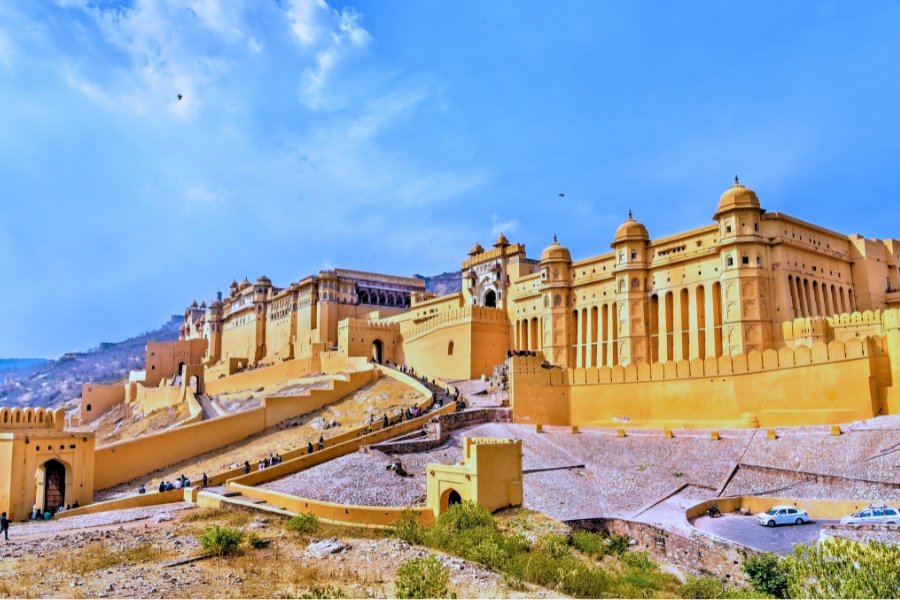
Jaipur, the capital of Rajasthan, is one of India's most colorful and culturally rich destinations. Known as the Pink City
What Are the Best Places to Visit in Jaipur in One Day?
Jaipur, the capital of Rajasthan, is one of India's most colorful and culturally rich destinations. Known as the Pink City, Jaipur attracts travelers with its magnificent forts, royal palaces, historic monuments, vibrant markets, and delicious Rajasthani cuisine. Whether you are visiting Rajasthan for the first time or planning a short trip from Delhi or Agra, Jaipur offers plenty of memorable experiences in a single day.
Although the city has numerous attractions, a well-planned itinerary allows you to explore its major highlights without feeling too rushed. From the impressive Amber Fort to the beautiful Hawa Mahal and the historic City Palace, every stop reveals a different part of Jaipur's royal heritage.
If you are wondering how to plan Jaipur in one day, the key is to start early, prioritize the main attractions, and group nearby places together. With comfortable transportation and a little advance planning, you can experience the city's history, architecture, shopping, and local food in approximately 10 to 12 hours.
In this guide, we will explore the best places to visit, recommended timings, travel tips, and a practical itinerary to help you make the most of your Jaipur sightseeing trip.
1. Amber Fort: Begin Your Day with Royal History
Amber Fort, also known as Amer Fort, is one of Jaipur's most famous attractions. Located on a hill overlooking Maota Lake, this magnificent fort is known for its grand courtyards, ornate gateways, intricate carvings, and beautiful combination of Rajput and Mughal architecture.
Built primarily during the reign of Raja Man Singh I and expanded by later rulers, Amber Fort reflects the wealth and artistic achievements of Rajasthan's royal families.
Visitors can explore the Diwan-i-Aam, Ganesh Pol, Sheesh Mahal, and several courtyards that once served important royal functions. The Mirror Palace, or Sheesh Mahal, is particularly impressive because of its detailed mirror work and decorative designs.
Why visit Amber Fort?
Discover Rajasthan's royal history and architecture.
Enjoy panoramic views of the surrounding hills and Maota Lake.
Explore ornate palaces, courtyards, and historic gateways.
Take memorable photographs of one of Jaipur's most iconic landmarks.
Suggested visiting time: 2 to 2.5 hours.
Travel tip: Arrive early in the morning to enjoy cooler temperatures and allow enough time to explore the complex. Check the current opening hours and ticket information before your visit.
2. Jal Mahal: Enjoy a Scenic View of the Water Palace
After visiting Amber Fort, stop at Jal Mahal, a beautiful palace situated in the middle of Man Sagar Lake. The palace is one of Jaipur's most recognizable sights because of its elegant architecture and picturesque setting against the surrounding hills.
Jal Mahal appears to float on the water, creating a striking view, especially in the early morning when the light reflects across the lake. The structure has several levels, some of which remain submerged when the lake is full.
Although access to the palace interior is generally restricted, visitors can admire it from designated viewpoints along the lakeside road.
What makes Jal Mahal special?
Its distinctive location in the middle of a lake.
Beautiful views of the Aravalli hills.
Excellent photography opportunities.
A convenient stop between Amber Fort and central Jaipur.
Suggested visiting time: 15 to 25 minutes.
Travel tip: Treat Jal Mahal as a short photo stop rather than a long sightseeing activity. This will help you save time for Jaipur's major palaces and historic attractions.
3. Hawa Mahal: Discover Jaipur's Famous Palace of Winds
Hawa Mahal is one of the most photographed monuments in Rajasthan and an essential stop for anyone exploring Jaipur. Built in 1799 by Maharaja Sawai Pratap Singh, this five-storey structure is famous for its pink sandstone façade and hundreds of small windows.
The palace was designed to allow royal women to observe everyday street life and public celebrations without being seen from outside. Its distinctive honeycomb-like exterior makes it an outstanding example of Rajput architecture.
While the exterior is the monument's most recognizable feature, visitors can also explore the interior passages, windows, and upper levels for views of the surrounding old city.
Top reasons to visit Hawa Mahal:
Photograph Jaipur's most iconic architectural landmark.
Learn about the traditions of the royal household.
Admire its delicate windows and decorative details.
Enjoy views of the busy streets of the Pink City.
Suggested visiting time: 30 to 45 minutes.
Travel tip: For a classic photograph of the façade, consider viewing it from a café or rooftop across the road. If you want to enter the monument, allow additional time for tickets and exploration.
4. City Palace: Experience Jaipur's Royal Heritage
Located in the heart of the old city, City Palace is a remarkable complex of courtyards, gardens, gateways, and royal buildings. It continues to be associated with Jaipur's former royal family and offers visitors a closer look at the city's history.
The palace complex combines Rajput, Mughal, and other architectural influences. Its decorative entrances, painted walls, and elegant courtyards are particularly appealing to visitors interested in architecture and photography.
Depending on the ticket purchased and the areas open to visitors, you may see museum galleries displaying royal costumes, historic weapons, manuscripts, and artifacts connected to Jaipur's rulers.
The palace is also conveniently located near Jantar Mantar and Hawa Mahal, making it easy to include in a central Jaipur sightseeing route.
Why include City Palace in your itinerary?
Explore an important center of Jaipur's royal history.
Admire traditional architecture and intricate decorative work.
Discover historical collections and royal artifacts.
Experience the cultural atmosphere of the old city.
Suggested visiting time: 1 to 1.5 hours.
Travel tip: Check which galleries and special areas are included in your admission ticket. If you have limited time, focus on the main courtyards and the museum sections that interest you most.
5. Jantar Mantar: Explore India's Historic Astronomical Observatory
Jantar Mantar is a UNESCO World Heritage Site and one of the most fascinating historical attractions in Jaipur. Built in the early 18th century under Maharaja Sawai Jai Singh II, the observatory contains a collection of large astronomical instruments designed to measure time and observe celestial movements.
Unlike conventional observatories, Jantar Mantar uses monumental masonry structures to perform astronomical calculations. Its instruments demonstrate the scientific knowledge and engineering skills available in India during the period.
The Samrat Yantra, a giant sundial, is among the site's most notable features. Other instruments were designed to study celestial positions and track astronomical events.
What can you experience at Jantar Mantar?
Learn how historical astronomers measured time.
See impressive scientific instruments made from stone and masonry.
Understand Jaipur's contribution to astronomy and mathematics.
Explore a UNESCO-listed heritage attraction.
Suggested visiting time: 45 minutes to 1 hour.
Travel tip: Consider hiring a knowledgeable guide if you want to understand how the instruments work. The explanations can make the visit much more engaging than simply walking through the site.
6. Albert Hall Museum: Discover Art, History, and Culture
Albert Hall Museum is one of Jaipur's most important museums and an excellent option for travelers interested in art and history. Located in Ram Niwas Garden, the building is admired for its Indo-Saracenic architectural style, detailed arches, domes, and decorative stonework.
The museum's collections include paintings, sculptures, metal objects, textiles, pottery, and other historical artifacts. Its exhibits reflect different aspects of Rajasthan's artistic traditions as well as broader cultural influences.
The museum building is especially attractive to photographers, and its exterior offers a different architectural perspective from the city's royal palaces and forts.
Reasons to visit Albert Hall Museum:
Discover regional art and traditional craftsmanship.
Explore historical objects and museum collections.
Admire a distinctive heritage building.
Add a cultural experience to your sightseeing day.
Suggested visiting time: 45 minutes to 1 hour.
Travel tip: Since the museum is not directly beside every other major attraction, consider visiting it if your schedule allows. If your priority is exploring the forts and palaces, you may need to shorten the visit or leave it for another trip.
7. Patrika Gate: Capture Colorful Rajasthani Architecture
Patrika Gate has become a popular photography destination in Jaipur because of its colorful arches, painted pillars, and elaborate decorative details. Located near Jawahar Circle, the structure showcases visual elements inspired by Rajasthan's cities, architecture, art, and cultural traditions.
Its vibrant colors and symmetrical design make it particularly appealing to visitors who enjoy photography and social media travel pictures.
Unlike the city's older forts and palaces, Patrika Gate is a comparatively modern landmark. Nevertheless, it offers an accessible introduction to regional artistic styles and can be a worthwhile addition to a sightseeing route.
What makes Patrika Gate worth visiting?
Colorful corridors and detailed painted artwork.
Attractive backgrounds for travel photography.
A chance to appreciate Rajasthani design motifs.
A convenient stop if you are traveling toward Jaipur International Airport or the southern part of the city.
Suggested visiting time: 20 to 30 minutes.
Travel tip: Visit during daylight for clear photographs, and be considerate of other visitors when taking pictures. Depending on your route, this stop may be more convenient later in the day rather than immediately after the old-city attractions.
8. Johari Bazaar and Bapu Bazaar: Enjoy Shopping in the Pink City
Jaipur is famous for its traditional markets, where visitors can shop for jewelry, textiles, handicrafts, footwear, and souvenirs. Johari Bazaar and Bapu Bazaar are two of the best-known shopping areas in the historic city.
Johari Bazaar is especially associated with jewelry, gemstones, and traditional ornaments. Bapu Bazaar is popular for textiles, colorful clothing, mojari footwear, bags, and locally made souvenirs.
Walking through these markets also gives you a glimpse of everyday life in Jaipur. The lively streets, traditional storefronts, and colorful displays make shopping an experience in itself.
Popular things to buy in Jaipur include:
Traditional Rajasthani jewelry and accessories.
Block-printed fabrics and textiles.
Handmade souvenirs and decorative items.
Mojari shoes and leather goods.
Blue pottery and other regional handicrafts.
Suggested visiting time: 45 minutes to 1 hour.
Travel tip: Bargaining is common in many traditional markets, but compare prices and check product quality before purchasing. For gemstones or precious jewelry, buy from a reputable seller and request appropriate documentation.
9. Try Authentic Rajasthani Food
A visit to Jaipur is not complete without sampling its local cuisine. Rajasthani food is known for bold flavors, traditional cooking methods, and dishes that reflect the region's climate and cultural heritage.
Depending on your preferences, you can enjoy a traditional Rajasthani thali, street snacks, or a relaxed meal at a local restaurant.
Some popular dishes to try include dal baati churma, gatte ki sabzi, ker sangri, and traditional sweets. Jaipur is also known for kachori, lassi, and a variety of local snacks.
Food experiences to consider:
Dal baati churma: A classic Rajasthani combination of baked wheat dumplings, lentils, and sweetened crumbled wheat.
Pyaaz kachori: A savory pastry filled with a spiced onion mixture.
Gatte ki sabzi: A traditional curry made with gram-flour dumplings.
Lassi: A refreshing yogurt-based drink.
Ghewar: A popular Rajasthani sweet often associated with festivals.
Suggested time: 45 minutes to 1 hour for lunch, with an optional short snack stop.