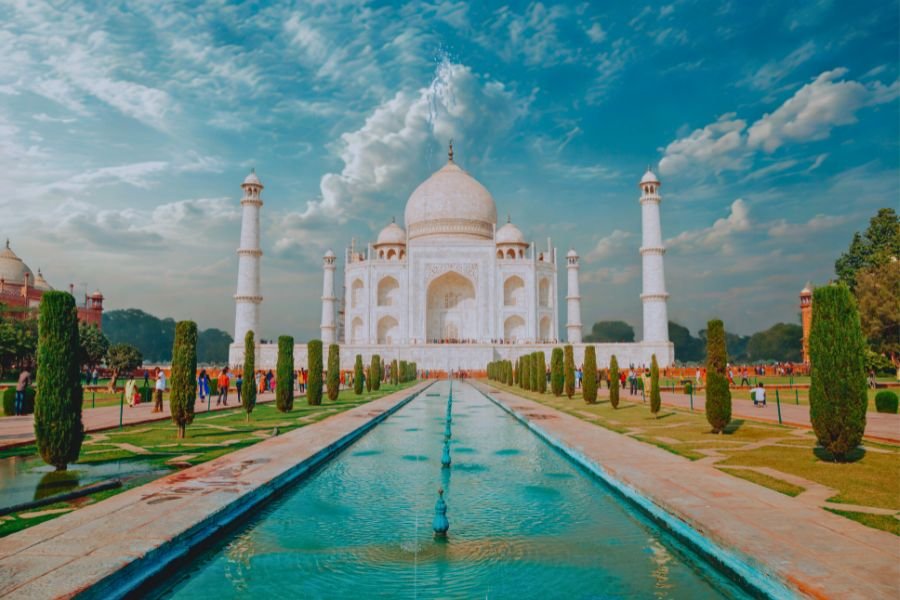
If you have only one day to experience Agra, you can still see the city's most famous landmarks, enjoy authentic local food, explore Mughal history
Agra Itinerary 1 Day: The Perfect Taj Mahal Trip
Agra Itinerary 1 Day at a Glance
If you have only one day to experience Agra, you can still see the city's most famous landmarks, enjoy authentic local food, explore Mughal history, and return to Delhi or continue your journey without feeling that you rushed through everything. The secret is simple: start early, keep your route practical, and place the Taj Mahal at the heart of your day. Agra is compact compared with many major Indian cities, but its attractions are spread across different parts of the city, so smart timing makes a noticeable difference. A well-planned day can feel less like ticking attractions off a list and more like following a story through the Mughal era, beginning with the Taj Mahal and continuing through Agra Fort and other historic sites.
For most first-time visitors, the Taj Mahal deserves the earliest slot because morning light creates a beautiful atmosphere around the monument, while an early start can also help you avoid some of the day's heat and crowds. The official Taj Mahal website states that the monument opens 30 minutes before sunrise and closes 30 minutes before sunset on normal visiting days, and it is closed to general visitors every Friday. This makes the day of your visit just as important as the hour you arrive. If your schedule is flexible, choosing a non-Friday day gives you considerably more freedom when planning a classic Agra sightseeing route.
Why Spend One Day in Agra?
Agra is one of those destinations where a single day can deliver an extraordinary amount of history. The city was an important Mughal capital and today contains some of India's most recognizable examples of Mughal architecture. The Taj Mahal may be the attraction that brings travelers here, but Agra Fort, Itimad-ud-Daulah, Mehtab Bagh, and the city's old neighborhoods add layers to the experience. The official tourism information describes Agra as a city rich in Mughal monuments and identifies Agra Fort and the Tomb of Itimad-ud-Daulah among its major heritage attractions.
A one-day visit works particularly well for travelers based in Delhi, Jaipur, or elsewhere in the Golden Triangle. You do not necessarily need to spend several nights in Agra to appreciate its major sights, especially if your priority is the Taj Mahal and the central Mughal heritage area. At the same time, trying to visit every attraction in and around Agra in one day can make the experience unnecessarily tiring. The better approach is to focus on two or three major monuments and leave enough time for meals, photography, transportation, and simply enjoying the atmosphere.
Best Time to Start Your Agra Day Trip
The earlier you begin, the more comfortable your sightseeing day is likely to feel. For a sunrise-focused visit, plan your arrival at the Taj Mahal around its opening period rather than treating the monument as a late-morning attraction. The official Taj Mahal FAQ specifically notes that sunrise is preferred by many visitors because the monument can take on a pinkish appearance in the early light, while early morning can also help visitors avoid some heat and crowds.
Your exact departure time depends on where you are coming from. If traveling from Delhi, an early train or private car allows you to reach Agra in time for the first major sightseeing stop. If you are already staying overnight in Agra, the plan becomes even easier because you can have breakfast after your Taj Mahal visit instead of spending part of the morning traveling. Either way, avoid building your schedule around exact minute-by-minute assumptions. Indian traffic, security checks, parking, queues, and seasonal conditions can all affect the pace of a sightseeing day.
Morning: Visit the Taj Mahal
The Taj Mahal should be the first major stop on your itinerary. Approaching the monument in the early morning has a special rhythm: the city is waking up, the air is generally calmer than later in the day, and the white marble begins to change character as the sunlight strengthens. Give yourself enough time to appreciate more than the famous front photograph. Look at the symmetry of the complex, the calligraphy, the marble details, the gardens, the reflecting pool, and the relationship between the central mausoleum and the surrounding structures.
The official visiting information says that the Taj Mahal opens 30 minutes before sunrise and closes 30 minutes before sunset, except that it is closed on Fridays. Ticket windows open one hour before sunrise and close 45 minutes before sunset. Current official information lists the regular Taj Mahal admission for domestic/Indian visitors at ₹50, while foreign visitors are listed at ₹1,100, with an additional ₹200 charge for access to the main mausoleum. Children below 15 years are not charged an entry fee according to the official site.
Security is an important part of the experience, so travel light. The official visitor guidance says that large bags should be avoided because they can increase security-check time, while several items are prohibited inside the monument. Water bottles are permitted, and the official guidance also notes the availability of facilities such as shoe racks and, for eligible ticket categories, battery buses and golf carts.
What to See Inside the Taj Mahal Complex
Do not make the mistake of treating the Taj Mahal as a single building. The complex works as a carefully balanced architectural composition, and walking through it slowly reveals details that are easy to miss when you are concentrating only on taking photographs. The great gateway frames the monument, the charbagh-style garden establishes a long visual axis, and the central mausoleum creates the unforgettable focal point. The mosque and corresponding guest structure on either side contribute to the symmetry of the complex.
Photography is naturally one of the highlights, but take a few minutes to put the camera away. Notice how the marble responds to changing light, how the monument looks different from different points in the garden, and how the Yamuna-side perspective changes your understanding of its scale. Photography is prohibited inside the main mausoleum, according to the official visitor guidance, and visitors are asked not to touch or scratch the monument's surfaces.
Allow approximately two to three hours for a relaxed Taj Mahal visit, especially if this is your first time. Rushing through in less than an hour may technically allow you to see it, but it reduces the experience to a checklist. A little extra time gives you room for security, walking, photographs, and appreciating the architecture without constantly watching your clock.
Late Morning: Breakfast and Local Agra Food
After leaving the Taj Mahal, take a proper breakfast break rather than immediately racing toward the next monument. Depending on your travel style, you can choose a hotel restaurant, a reputable local restaurant, or a café near the Taj area. Agra's food culture includes North Indian staples as well as local specialties, and this is a good moment to try something characteristic of the region.
If you enjoy sweets, Agra's famous petha is an obvious choice. It comes in different flavors and textures, and trying it from a reputable shop can be a pleasant part of the trip. You may also find Mughlai-inspired dishes, stuffed breads, kebabs, curries, and other North Indian options. For a one-day trip, however, avoid an excessively heavy meal if you still have several monuments to explore. A satisfying breakfast or early lunch can keep your energy steady without turning the afternoon into a battle against food-induced sleepiness.
Midday: Explore Agra Fort
After the Taj Mahal, Agra Fort is the natural second major attraction. The fort is not simply a defensive structure; it is a huge historic complex containing palaces, courtyards, halls, gateways, and viewpoints associated with Mughal rulers. From selected areas, visitors can also gain a memorable perspective toward the Taj Mahal, creating a visual connection between two of Agra's most important monuments.
The official Taj Mahal tourism website lists Agra Fort as open from sunrise to sunset. Its current published admission information lists ₹50 for Indian visitors and ₹650 for foreign tourists, with different Friday rates shown on the official ticketing information. Children below 15 are listed as exempt from the entry fee.
Plan roughly 1.5 to two hours for Agra Fort. You do not need to inspect every corner to appreciate it, but moving too quickly can make the fort seem like a collection of stone walls rather than a living chapter of Mughal history. Pay attention to the contrast between imposing defensive architecture and the refined palace interiors. The combination of red sandstone, carved details, courtyards, and marble elements tells you something important about how royal power and artistic expression existed side by side.
Understanding the Story Behind Agra Fort
One of the most fascinating aspects of Agra Fort is the way it connects with the broader Mughal story. The fort was developed into a major imperial residence under Akbar and later modified by subsequent Mughal rulers. As you walk through the complex, you can see how the architectural language evolved, from robust red sandstone structures to more delicate decorative elements.
A visit becomes much more meaningful when you understand that the fort was not merely a military installation. It was also a royal city, a place of administration, ceremony, residence, and political decision-making. Looking from the fort toward the Taj Mahal can add another dimension to your visit because the two monuments represent different chapters in the history of the Mughal court.
Lunch: Taste Agra's Mughlai Flavors
By early afternoon, you will probably be ready for a proper lunch. Agra is an excellent place to explore Mughlai and North Indian cuisine, particularly if you enjoy aromatic gravies, grilled dishes, breads, rice preparations, and rich vegetarian options. You can choose a restaurant based on your location and schedule rather than crossing the city just for a particular meal.
A good one-day itinerary should protect your sightseeing time, so lunch does not need to become a two-hour event. Around 45 to 60 minutes is usually enough for a comfortable meal before continuing. If you are traveling with family, elderly relatives, or children, give yourself a little more flexibility. The best itinerary is not necessarily the one that fits the largest number of attractions; it is the one that leaves you with enough energy to enjoy the attractions you actually visit.
Afternoon Option: Itimad-ud-Daulah
If you have time after lunch, consider visiting the Tomb of Itimad-ud-Daulah. Often associated with the nickname "Baby Taj," the monument provides a more intimate architectural experience than the enormous Taj Mahal. Its decoration, marble work, gardens, and detailed craftsmanship make it particularly interesting for visitors who want to explore Mughal architecture beyond the city's most famous monument.
The official tourism site lists Itimad-ud-Daulah among Agra's principal monuments and provides current ticket information for the site. The attraction is particularly useful in a one-day schedule because it does not require the same amount of time as the Taj Mahal. You can explore it at a slower pace, take photographs, and then continue toward the riverfront.
If you are already feeling tired, however, this is one of the first places you can remove from the itinerary. Your day does not become unsuccessful simply because you visit two major monuments instead of four. The Taj Mahal and Agra Fort provide a strong core itinerary, while Itimad-ud-Daulah works as an additional stop when time and energy allow.
Late Afternoon: Mehtab Bagh and the Taj View
For travelers who want another memorable view of the Taj Mahal, Mehtab Bagh and the nearby Taj View Point can be considered as an afternoon or sunset option. The official Taj Mahal website describes the viewpoint near Mehtab Bagh as a panoramic location on the Yamuna River where visitors can see the Taj Mahal from a different perspective.
This part of the day can be especially appealing to photographers because the viewpoint changes the composition completely. Instead of standing directly in front of the monument, you see the Taj across the river, with the surrounding landscape contributing to the photograph. The official site lists different visiting arrangements and ticket rates for the viewpoint, so travelers should check the latest local information before visiting.
If your return train or car departure is early, skip this stop rather than creating unnecessary stress. If you have several hours available in the evening, however, it can provide a peaceful final chapter to your sightseeing day.
Agra Itinerary 1 Day: Suggested Schedule
| Time | Activity | Suggested Duration |
|---|---|---|
| Early morning | Arrive in Agra and transfer to Taj Mahal | 30–60 minutes |
| Sunrise to morning | Taj Mahal visit | 2–3 hours |
| Morning | Breakfast | 45–60 minutes |
| Late morning | Agra Fort | 1.5–2 hours |
| Early afternoon | Lunch | 45–60 minutes |
| Afternoon | Itimad-ud-Daulah or local sightseeing | 1–1.5 hours |
| Late afternoon | Mehtab Bagh/Taj View Point | 1–1.5 hours |
| Evening | Return to station/hotel or depart Agra | Flexible |
This schedule is deliberately flexible because travel time can vary. If you arrive by train, allow additional time for getting from the railway station to your first attraction. If you travel by private car, your driver can help you adjust the order according to traffic and departure time. The most important rule is to keep a buffer before your return journey instead of planning sightseeing until the exact minute your train or vehicle leaves.
How to Reach Agra for a One-Day Trip
Agra is well connected with Delhi and other cities in North India, making it convenient for a short visit. Travelers commonly arrive by train, private car, bus, or organized tour. For someone traveling from Delhi, a fast train can make a day trip particularly practical because it allows you to spend the majority of your time in Agra rather than on the road.
Private car travel offers another advantage: flexibility. You can usually arrange pickup from your hotel, travel directly to Agra, move between monuments without changing transportation, and leave according to your own schedule. This can be especially useful for families, couples, and small groups carrying luggage or traveling with older passengers.
If you arrive at Agra Cantt railway station, remember that it is not directly beside the Taj Mahal. The official Taj Mahal tourism information gives the distance from Agra Cantt Railway Station to Agra Fort as approximately 5.5 kilometers. From the station, you can continue by taxi, auto-rickshaw, or another local transportation option.
Where to Stay If You Have More Than One Day
Although this guide focuses on a single day, staying overnight in Agra can make your experience considerably more relaxed. Instead of worrying about catching an evening train, you can enjoy the sunset, have dinner, and start the next morning without rushing. There are accommodation options across different budgets, from simple guesthouses to full-service hotels.
For visitors interested mainly in the Taj Mahal, staying in the Taj Ganj area can place you relatively close to the monument. Other travelers may prefer areas with easier highway access or larger hotels. The right location depends on whether your priority is walking distance to attractions, hotel facilities, dining options, or convenient departure from the city.
Practical Tips for Visiting the Taj Mahal
A few small preparations can make a major difference. Carry government-issued identification, keep your belongings minimal, wear comfortable footwear, and check the official monument rules before leaving for the Taj Mahal. The official visitor information specifically advises tourists to carry government-issued identification and warns against bringing prohibited items.
Avoid assuming that every item you normally carry is allowed inside the monument. The official rules prohibit several categories of belongings, including food, smoking-related items, knives, tripods, and certain electronic accessories. Mobile phones should be switched off or kept on silent mode, and photography is not permitted inside the main mausoleum.
Weather also matters. Summer afternoons in Agra can be extremely hot, while winter mornings may be cool and sometimes hazy. Spring and autumn can offer comfortable sightseeing conditions, although the exact experience changes from year to year. Regardless of season, an early start gives you a better chance of enjoying the major monuments before the strongest afternoon heat.
What to Wear in Agra
Comfort should be your first consideration when choosing clothes for a full day of sightseeing. You may walk significant distances between gates, courtyards, gardens, parking areas, and monuments, so comfortable shoes are more important than fashionable footwear. Lightweight clothing is useful during warm months, while winter visitors should bring layers because mornings can feel quite cold.
A hat, sunglasses, and sunscreen can be helpful when visiting during sunny periods. If you are traveling during the monsoon season, a compact rain jacket or umbrella can make your day easier. There is no need to overpack. A small day bag containing essential personal items, identification, water, and basic sun protection is generally more convenient than a large backpack.
How Much Does a One-Day Agra Trip Cost?
The total cost varies significantly depending on where you begin, your transportation, restaurant choices, guide arrangements, and whether you are traveling alone or with a group. Monument tickets form only one part of the budget. Transportation from Delhi, local transfers, meals, guide services, shopping, and accommodation can all change the final amount.
For current monument admission, official Taj Mahal information lists ₹50 for Indian visitors and ₹1,100 for foreign tourists, with an additional ₹200 ticket for those who want to enter the main mausoleum. Agra Fort is currently listed at ₹50 for Indian visitors and ₹650 for foreign tourists on the official tourism website, although rates and categories should always be checked before your visit.
Because transportation costs can change based on vehicle type, season, pickup location, and demand, it is better to obtain a current quote rather than relying on an old generic price. If traveling as a couple or family, compare the total cost of private transportation with individual train or bus tickets before deciding.
Should You Hire a Guide?
A guide is not essential for simply seeing the monuments, but a knowledgeable approved guide can change the experience by explaining architectural details, historical events, symbolism, and stories that are difficult to understand from the buildings alone. The official Taj Mahal visitor guidance recommends using approved guides and photographers who display their identity cards.
If history is a major reason for your trip, consider hiring a guide for the Taj Mahal and Agra Fort. If you mainly want photographs and independent exploration, you may prefer to explore at your own pace. The choice ultimately depends on how you like to travel.
Shopping in Agra
If time allows, you can dedicate a short portion of your afternoon or evening to shopping. Agra is known for marble inlay work, handicrafts, leather goods, textiles, sweets, and souvenirs. Marble items inspired by Mughal decorative techniques can be particularly attractive, but quality varies considerably, so shoppers should compare craftsmanship and prices before purchasing.
Do not allow shopping to consume the entire afternoon if your main objective is sightseeing. A one-day trip has limited hours, and every additional stop affects the rest of your schedule. If you want an extensive shopping experience, staying overnight is a better choice.
Common Mistakes to Avoid
One common mistake is arriving at the Taj Mahal too late. Since the monument is usually the central purpose of an Agra visit, giving it the leftover time after other attractions is rarely a good strategy. Another mistake is trying to squeeze in Fatehpur Sikri during a short one-day city itinerary without considering the extra travel time. Fatehpur Sikri is a worthwhile destination, but it works better when you have additional hours or are deliberately planning a broader Agra-and-Fatehpur-Sikri day.
Another mistake is ignoring the day of the week. The Taj Mahal is closed to general visitors every Friday, while other Agra monuments remain open according to their respective schedules. Always verify opening information close to your travel date because official operating conditions can change.
Finally, do not underestimate the value of downtime. Sitting down for breakfast, drinking water, enjoying lunch, and taking a few quiet minutes between monuments can make the difference between a memorable day and an exhausting one.
Is One Day Enough for Agra?
For a first visit focused on the Taj Mahal, Agra Fort, and one optional attraction, one day can be enough. You will not experience every corner of the city, and you certainly will not uncover every layer of its history, but you can experience its most important highlights. Think of a one-day visit as an introduction rather than a complete biography.
If you are interested in architecture, photography, Mughal history, local food, or relaxed exploration, two days would provide more breathing room. With two days, you could visit additional monuments, explore local markets, spend more time around Mehtab Bagh, and enjoy the city after the main tourist hours. But if your schedule is tight, careful planning makes a single day highly rewarding.
Agra Itinerary 1 Day for Families
Families should consider a slightly slower version of the itinerary. Children may enjoy the Taj Mahal and Agra Fort, but long walks, queues, heat, and security procedures can become tiring. Start early, carry permitted water, plan regular breaks, and avoid trying to visit every possible attraction.
For families with young children, the Taj Mahal and Agra Fort can form the main sightseeing program, followed by lunch and a relaxed return journey. If everyone still has energy, add one optional attraction. This approach gives you flexibility if the children need a break or if the weather becomes uncomfortable.
Agra Itinerary 1 Day for Couples and Photographers
Couples and photography enthusiasts may prefer a slower schedule centered around changing light. The Taj Mahal at sunrise provides the obvious highlight, while Agra Fort offers architectural compositions and historical perspectives. A later visit to a Taj viewpoint can create a completely different visual experience.
Photographers should remember that tripods are prohibited inside the Taj Mahal according to the official visitor rules, and photography is restricted inside the main mausoleum. Plan your equipment accordingly and always follow security instructions.
Final Tips Before You Leave for Agra
Before beginning your journey, check the Taj Mahal's official opening information, particularly if your travel date is close to a Friday or a major holiday. Confirm your train or vehicle schedule, keep some buffer time for traffic, and avoid carrying unnecessary belongings into the monument. The official website provides current visitor information, ticket details, rules, and contact information, making it the most useful place to verify monument-specific details before your trip.
A successful Agra day is not about seeing the maximum number of monuments. It is about seeing the right places in the right order. Begin with the Taj Mahal, explore Agra Fort, take a proper meal break, add one optional attraction if time permits, and keep your return journey comfortable. That simple structure gives you enough room for history, architecture, food, photographs, and the small unexpected moments that make travel memorable.
Conclusion
A carefully planned Agra day can be far more rewarding than its short duration suggests. The Taj Mahal provides the emotional centerpiece, while Agra Fort adds historical depth and architectural variety. Optional stops such as Itimad-ud-Daulah and Mehtab Bagh can expand the experience when your schedule allows, but they should never come at the cost of rushing through the city's primary attractions.
The best approach is to start early, travel light, respect monument rules, leave realistic gaps between activities, and check official information before you go. The Taj Mahal currently opens 30 minutes before sunrise and remains open until 30 minutes before sunset on regular visiting days, while Friday is the weekly closure day. With those basics in mind, even travelers with only a single day can experience the grandeur, history, and atmosphere that make Agra one of India's most memorable heritage destinations.
FAQs
1. Can I visit the Taj Mahal and Agra Fort in one day?
Yes. The Taj Mahal and Agra Fort are well suited to a one-day sightseeing schedule. Starting at the Taj Mahal in the morning and visiting Agra Fort afterward gives you enough time for both without making the day unnecessarily rushed.
2. Is the Taj Mahal open every day?
The Taj Mahal is closed to general visitors every Friday. On other normal visiting days, the official website states that it opens 30 minutes before sunrise and closes 30 minutes before sunset.
3. What should I visit after the Taj Mahal?
Agra Fort is the most natural next stop for a first-time visitor. If you have additional time, you can consider Itimad-ud-Daulah or a Taj Mahal viewpoint near Mehtab Bagh.
4. How much time should I spend at the Taj Mahal?
Around two to three hours is a comfortable amount of time for most first-time visitors. This allows time for security, walking through the complex, photography, gardens, and exploring the monument without rushing.
5. Is one day enough to explore Agra?
One day is enough for the major highlights, particularly the Taj Mahal and Agra Fort, with time for one additional attraction if transportation and timing work well. Travelers wanting deeper exploration of Agra's monuments, markets, food, and surrounding attractions should consider staying longer.