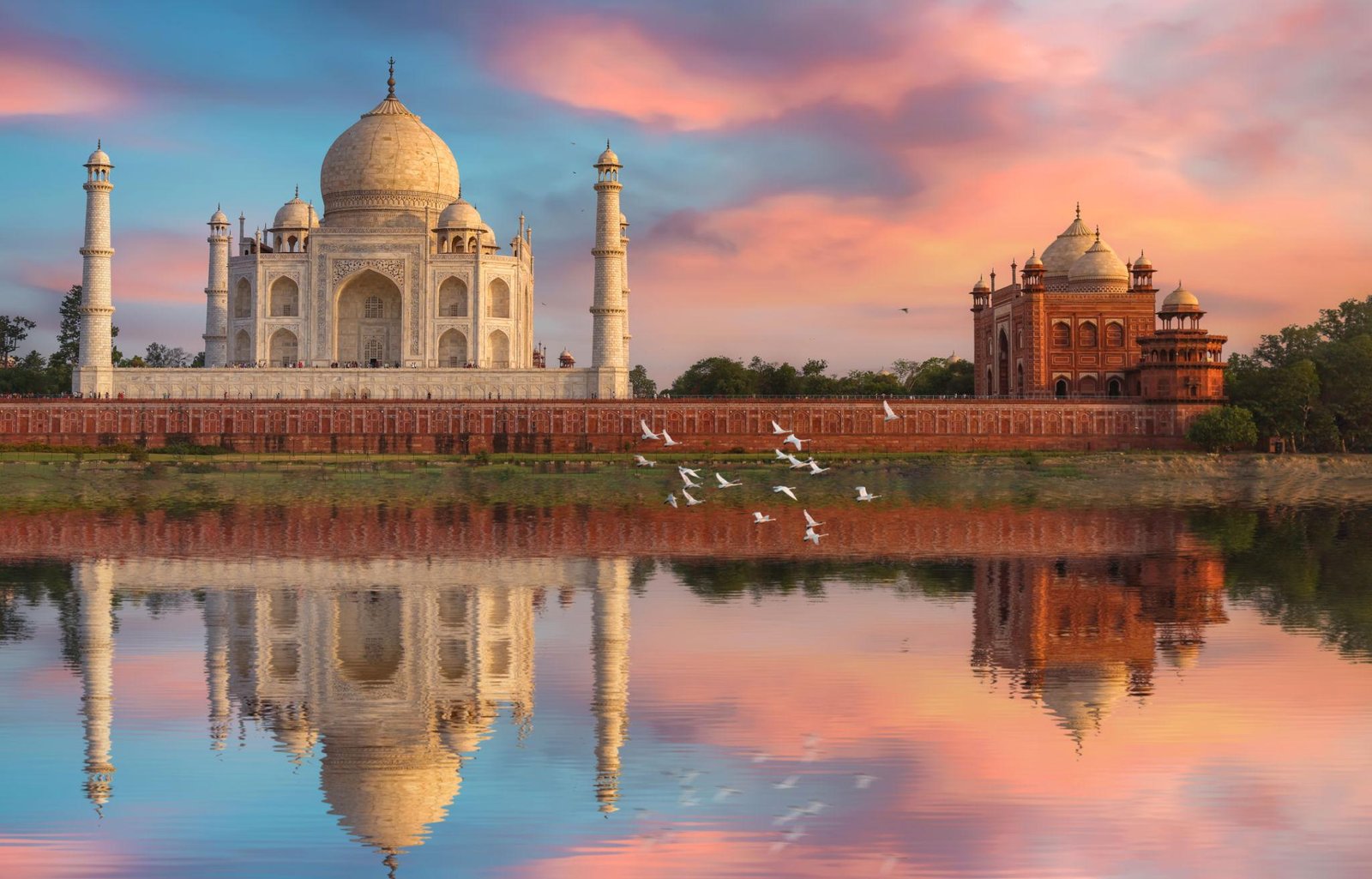
Discover a different side of Agra through forgotten Mughal gardens, beautiful tombs, peaceful riverside viewpoints, ancient religious sites and fascinating local heritage. When people think of Agra, the first image that comes to mind is undoubtedly the magnificent Taj Mahal. Millions of travellers visit this white-marble masterpiece every year, making it one of India's most recognised tourist attractions. However, there is much more to Agra than its famous monument. Behind the busy tourist routes and crowded sightseeing spots lies another side of the city. It is a place of forgotten Mughal gardens, lesser-known tombs, remarkable architectural details, peaceful spiritual destinations and stories that have remained hidden for centuries. Agra was once an important centre of the Mughal Empire, and its historical importance extends far beyond the Taj Mahal and Agra Fort. From the beautiful Persian-style gardens established by Emperor Babur to the remarkable glazed-tile decoration of Chini Ka Rauza, the city offers countless experiences for travellers who enjoy discovering places beyond the usual tourist attractions. If you are planning a visit to Agra and want to explore something different, here are 10 fascinating places that deserve a place on your travel itinerary.

1. Chini Ka Rauza – A Forgotten Masterpiece of Persian Architecture
Located near the eastern bank of the Yamuna River, Chini Ka Rauza is one of Agra's most fascinating yet frequently overlooked historical monuments.
Built around 1635, this tomb is dedicated to Allama Afzal Khan Mullah, a Persian poet, scholar and prime minister during Emperor Shah Jahan's reign. What makes this monument particularly special is its distinctive glazed-tile decoration, known as chini or kashi work.
Unlike the white marble architecture commonly associated with Mughal monuments, Chini Ka Rauza features colourful decorative tiles in shades of blue, turquoise and other tones. Although much of its original decoration has weathered over time, the remaining patterns still reveal the artistic sophistication of the Mughal period.
The monument provides an excellent opportunity to understand the Persian influence on Mughal architecture. Its relatively peaceful surroundings also make it an interesting stop for photographers and history enthusiasts.
Why visit Chini Ka Rauza?
Discover unusual Persian-style glazed-tile architecture.
Explore a lesser-known Mughal tomb.
Photograph its colourful decorative details.
Learn about the Persian scholars who served in the Mughal royal court.
Travel tip: Combine Chini Ka Rauza with Itimad-ud-Daulah and Ram Bagh to explore the quieter heritage attractions on this side of the Yamuna.
2. Ram Bagh – Walk Through One of India's Oldest Mughal Gardens
If you want to experience the peaceful side of Agra, Ram Bagh is a wonderful place to include in your sightseeing plan.
Originally established by Mughal Emperor Babur around 1528, Ram Bagh is regarded as the oldest surviving Mughal garden in India. It was also known as Aram Bagh, meaning the Garden of Rest.
The garden reflects the traditional Persian charbagh concept, where the landscape is organised around a symmetrical arrangement of pathways, water channels and garden sections.
Unlike the grand monuments of Agra, Ram Bagh offers a quieter atmosphere. Its greenery, historical layout and connection with the early Mughal period make it a rewarding destination for visitors interested in landscape architecture and history.
Walking through the garden provides an opportunity to understand how Mughal emperors designed their surroundings to represent beauty, order and paradise.
Why visit Ram Bagh?
Explore one of India's oldest surviving Mughal gardens.
Understand the traditional Persian garden concept.
Enjoy a peaceful break from crowded tourist attractions.
Discover the early architectural legacy of Emperor Babur.
Travel tip: Visit during the cooler morning or late-afternoon hours for a more comfortable garden experience.
3. Tomb of Mariam-uz-Zamani – Discover the Story of Akbar's Rajput Empress
Located near Sikandra, the Tomb of Mariam-uz-Zamani is one of Agra's most interesting historical sites.
Mariam-uz-Zamani was the Rajput wife of Emperor Akbar and the mother of Emperor Jahangir. Her tomb is often overlooked by travellers who visit only Akbar's Tomb at Sikandra.
The structure is particularly interesting because it was adapted from an earlier Lodi-era building. Its architectural design combines Mughal influences with decorative elements that reflect the artistic traditions of the period.
The monument features carved sandstone facades, elegant architectural details and a peaceful garden setting.
Visiting this tomb offers a different perspective on Mughal history, particularly the relationships between the Mughal royal family and Rajput kingdoms.
Why visit Mariam-uz-Zamani's Tomb?
Learn about an important woman in Mughal history.
Explore a monument often missed by regular sightseeing itineraries.
Appreciate its distinctive architectural design.
Discover the historical connections between the Mughal and Rajput dynasties.
Travel tip: Akbar's Tomb is approximately one kilometre away, making it easy to explore both monuments during the same visit.
4. Mehtab Bagh – Enjoy a Different View of the Taj Mahal
Although Mehtab Bagh is not entirely unknown, many visitors overlook it while planning their Agra sightseeing experience.
Situated across the Yamuna River, directly opposite the Taj Mahal, this historic garden offers a different perspective of the famous monument.
Mehtab Bagh is associated with the Mughal garden tradition and is believed to have been laid out during Babur's time. Its name translates to Moonlight Garden.
The garden is particularly popular among photographers because it provides an open view of the Taj Mahal from the opposite riverbank.
During the late afternoon, the changing sunlight creates beautiful photographic opportunities. Visitors can enjoy the monument from a distance without experiencing the same atmosphere as the busy main entrance.
Mehtab Bagh is also associated with stories about Shah Jahan's supposed plan to construct a black marble counterpart to the Taj Mahal. However, the popular Black Taj story remains a historical legend rather than an established archaeological fact.
Why visit Mehtab Bagh?
Enjoy a different viewpoint of the Taj Mahal.
Capture beautiful sunset photographs.
Experience a peaceful Mughal garden.
Explore the Yamuna riverfront landscape.
Travel tip: Allow approximately one hour for the garden and photography. Check the latest opening hours before visiting.
5. Akbar's Tomb, Sikandra – Explore the Legacy of a Great Mughal Emperor
Located on the outskirts of Agra, Akbar's Tomb at Sikandra is an impressive historical monument that deserves more attention from visitors.
Emperor Akbar began the construction of his own tomb, which was completed by his son Jahangir in 1613.
The enormous complex is surrounded by a beautiful garden and features an impressive entrance gateway, intricate decorative work and a distinctive combination of red sandstone and white marble.
One of the most fascinating aspects of the monument is its architectural design. It combines Persian, Islamic and Indian artistic influences, reflecting the cultural openness associated with Akbar's reign.
The tomb's five-storey structure is different from the traditional Mughal mausoleums that many visitors expect to see.
Its peaceful gardens and impressive architectural details make it an excellent destination for travellers interested in Mughal history.
Why visit Akbar's Tomb?
Explore the final resting place of Emperor Akbar.
Discover a unique blend of architectural traditions.
Photograph the impressive entrance gateway.
Learn about one of India's most influential historical rulers.
Travel tip: Combine Akbar's Tomb with Mariam-uz-Zamani's Tomb and Guru Ka Taal for a half-day heritage excursion.
6. Guru Ka Taal – A Historic Sikh Pilgrimage Destination
Agra is not only a city of Mughal monuments; it also has important religious and spiritual destinations.
Guru Ka Taal is a historic Sikh pilgrimage site located near Sikandra. It is associated with the ninth Sikh Guru, Sri Guru Tegh Bahadur Ji.
The site is traditionally connected with the Guru's sacrifice and his stand for religious freedom.
The Gurudwara features impressive architectural elements, peaceful surroundings and a spiritual atmosphere that offers a different experience from Agra's traditional historical attractions.
Visitors can explore the religious complex, observe Sikh traditions and learn about the site's significance in Sikh history.
Why visit Guru Ka Taal?
Discover an important Sikh religious destination.
Learn about the history of Guru Tegh Bahadur Ji.
Experience the peaceful atmosphere of a Gurudwara.
Explore another dimension of Agra's cultural heritage.
Travel tip: Visitors should dress modestly and follow the Gurudwara's rules. Covering the head and removing footwear before entering the prayer area are customary.
7. Soami Bagh Samadh – A Remarkable Spiritual Landmark
For travellers interested in religious architecture and peaceful surroundings, Soami Bagh is an interesting destination in Agra.
Located in the Dayalbagh area, the site is associated with the Radhasoami faith, which originated in Agra during the nineteenth century.
The Samadh is an impressive white-marble religious structure featuring intricate stone carvings, decorative details and remarkable craftsmanship.
Its construction and artistic development have continued over a long period, making it particularly interesting for visitors who appreciate traditional stonework.
Unlike the Mughal monuments that dominate Agra's tourism identity, Soami Bagh introduces travellers to another important chapter in the city's religious and architectural history.
Why visit Soami Bagh?
Discover the heritage of the Radhasoami faith.
Admire detailed marble craftsmanship.
Experience a peaceful spiritual environment.
Explore a different architectural tradition in Agra.
Travel tip: Check visitor access and photography rules in advance, as this is an active religious site.
8. Roman Catholic Cemetery – A Different Chapter of Agra's History
One of the more unusual historical destinations in Agra is the Roman Catholic Cemetery.
This historic burial ground reflects the European presence in Agra during the Mughal and later colonial periods.
The cemetery contains old graves, memorials and tombstones that reveal stories of European soldiers, officials, merchants and families who lived in India centuries ago.
One of its most notable monuments is the tomb of John Hessing, a Dutch officer who served in the army of the Maratha ruler Daulat Rao Scindia.
His tomb is particularly interesting because of its architectural resemblance to the Taj Mahal. It is sometimes referred to as the Red Taj Mahal because of its red sandstone appearance.
The cemetery offers an unusual perspective on Agra's multicultural past and the European communities that became part of the city's history.
Why visit the Roman Catholic Cemetery?
Discover the European chapter of Agra's history.
See the distinctive tomb of John Hessing.
Explore historical memorials and inscriptions.
Learn about the city's cultural diversity.
Travel tip: Treat the cemetery as a heritage and religious site. Confirm access arrangements before visiting and maintain a respectful atmosphere.
9. Taj Nature Walk – Experience Agra's Natural Side
If you want a break from historical monuments, Taj Nature Walk offers a refreshing outdoor experience.
Located near the Taj Mahal, this green area provides walking paths and opportunities to enjoy nature within the city.
It is a different way to experience the surroundings of one of India's most famous landmarks.
Instead of spending all your time exploring buildings and monuments, you can enjoy greenery, observe birds and experience a quieter environment.
For nature lovers and photographers, the area offers an interesting alternative to the usual sightseeing routine.
Why visit Taj Nature Walk?
Enjoy a green space near the Taj Mahal.
Experience a relaxing outdoor walk.
Observe local birdlife and vegetation.
Discover a different side of Agra's urban landscape.
Travel tip: Early morning is generally preferable for outdoor walks, especially during warmer months. Check current access arrangements before your visit.
10. Mariam's Garden and the Forgotten Heritage of Sikandra
Sikandra is best known for Akbar's Tomb, but the surrounding area contains several historical and cultural attractions that many tourists never explore.
Beyond the main mausoleum, visitors can discover quieter heritage corners, historical gardens and religious landmarks that help explain the importance of this part of Agra.
The nearby Tomb of Mariam-uz-Zamani is particularly worth including in this exploration.
Rather than rushing between major attractions, spend some additional time understanding the historical landscape of Sikandra.
The area provides an opportunity to discover the relationship between Mughal architecture, royal gardens and the history of the imperial family.
Why explore Sikandra beyond Akbar's Tomb?
Discover lesser-known historical attractions.
Learn more about the Mughal royal family.
Enjoy a slower heritage sightseeing experience.
Combine historical and religious attractions in one excursion.
Travel tip: Plan a dedicated heritage route around Sikandra rather than treating Akbar's Tomb as a quick photo stop.
How to Explore Agra Beyond the Taj Mahal
Exploring these lesser-known attractions becomes much easier when you organise your sightseeing according to their geographical locations.
Instead of travelling randomly across the city, divide your visit into different heritage circuits.
Suggested One-Day Hidden Agra Itinerary
Morning: Mughal Heritage and Architecture
Start with Akbar's Tomb at Sikandra.
Visit the nearby Tomb of Mariam-uz-Zamani.
Explore Guru Ka Taal.
Continue towards Ram Bagh.
Afternoon: Riverside Heritage
Visit Chini Ka Rauza.
Explore the Tomb of Itimad-ud-Daulah if time permits.
Enjoy lunch at a local restaurant.
Evening: Photography and Relaxation
Head towards Mehtab Bagh.
Enjoy the beautiful view of the Taj Mahal across the Yamuna.
Finish your day with a peaceful sunset experience.
If you have additional time, include Soami Bagh, the Roman Catholic Cemetery and Taj Nature Walk, subject to visitor access and opening hours.
Best Time to Explore Hidden Places in Agra
The best time to explore Agra is generally between October and March, when the weather is more comfortable for sightseeing.
October to March: This is the most pleasant period for exploring gardens, tombs and historical monuments. The cooler weather makes walking and outdoor photography more enjoyable.
April to June: Summer temperatures can become extremely high. If you visit during these months, plan outdoor sightseeing early in the morning and later in the afternoon.
July to September: The monsoon season brings greenery to gardens and surrounding landscapes. However, occasional rainfall and humidity may affect outdoor sightseeing plans.
For photography, early mornings and late afternoons generally offer softer natural light.
How to Travel Around Agra?
The easiest way to explore Agra's lesser-known attractions is by hiring a private car with an experienced local driver or guide.
Many of these places are located in different parts of the city, and public transport may not always provide convenient connections between them.
A private sightseeing tour allows you to:
Explore multiple attractions at your own pace.
Avoid unnecessary travel between different locations.
Learn about Mughal history through a knowledgeable local guide.
Spend more time at places that interest you.
Enjoy comfortable transfers between monuments.
For international visitors, having a local guide can also make the experience more meaningful by explaining historical details, architectural features and local traditions.
Final Thoughts: Discover the Agra That Most Travellers Never See
The Taj Mahal may be the reason millions of people visit Agra, but it is certainly not the only reason to fall in love with this historic city.
From the colourful glazed tiles of Chini Ka Rauza to the peaceful gardens of Ram Bagh, from Akbar's impressive mausoleum to the spiritual atmosphere of Soami Bagh, Agra offers a remarkable collection of experiences waiting to be discovered.
These lesser-known attractions reveal the city's fascinating history, architectural diversity and cultural richness.
So, on your next visit, do not limit your journey to the Taj Mahal and Agra Fort. Take a little extra time, explore the quieter corners and discover the stories that make Agra much more than a city of monuments.
Ready to explore Agra beyond the Taj Mahal? Discover the city's hidden heritage with a local sightseeing experience and make your visit to Agra even more memorable.
Frequently Asked Questions (FAQs)
1. What are the best hidden places to visit in Agra apart from the Taj Mahal?
Some interesting lesser-known attractions include Chini Ka Rauza, Ram Bagh, Mariam-uz-Zamani's Tomb, Guru Ka Taal, Soami Bagh and the Roman Catholic Cemetery. These places offer a different perspective on Agra's Mughal, religious and colonial heritage.
2. Is Agra worth visiting for more than one day?
Yes. While many visitors explore the Taj Mahal and Agra Fort on a day trip, staying for two days allows you to discover lesser-known monuments, Mughal gardens, local markets and cultural attractions without rushing.
3. What is the most underrated historical monument in Agra?
Chini Ka Rauza is among Agra's most underrated historical monuments. Its Persian glazed-tile decoration and connection with Shah Jahan's court make it particularly interesting for history and architecture enthusiasts.
4. Can I explore hidden places in Agra in one day?
Yes. You can explore several attractions in one day by planning a route that includes Sikandra, Ram Bagh, Chini Ka Rauza and Mehtab Bagh. Some additional attractions may require more time.
5. Which hidden places in Agra are best for photography?
Chini Ka Rauza is excellent for architectural photography, Mehtab Bagh offers a beautiful view of the Taj Mahal, and Akbar's Tomb is known for its impressive gateway and architectural details.
6. Is a private car recommended for exploring lesser-known places in Agra?
Yes. A private car is a convenient option because several attractions are spread across different parts of Agra. It also provides greater flexibility when visiting multiple destinations.
7. What is the best time to visit Agra's historical monuments?
October to March is generally the most comfortable period for sightseeing. Early mornings and late afternoons are particularly suitable for outdoor attractions and photography.
8. Are the lesser-known attractions in Agra suitable for foreign tourists?
Yes. Many of these attractions offer valuable insights into Indian history, Mughal architecture and local religious traditions. International visitors can benefit from hiring a knowledgeable local guide.
9. Can I combine hidden Agra attractions with a Golden Triangle tour?
Absolutely. You can add lesser-known Agra attractions to your Delhi–Agra–Jaipur Golden Triangle itinerary. An additional day in Agra is ideal if you want to explore the city beyond its famous monuments.
10. Do I need a local guide to explore Agra's hidden attractions?
A local guide is not essential at every attraction, but it can significantly improve the experience. A knowledgeable guide can explain historical stories, architectural details and cultural significance that visitors might otherwise miss.