Planning a trip through India's most famous historic cities does not have to be complicated. If you are wondering how to plan a Golden Triangle Tour from Delhi
How Do I Plan a Golden Triangle Tour from Delhi?
Planning a trip through India's most famous historic cities does not have to be complicated. If you are wondering how to plan a Golden Triangle Tour from Delhi, the simplest approach is to connect Delhi, Agra, and Jaipur in that order. These three destinations offer remarkably different experiences: Delhi combines ancient landmarks with a modern capital-city atmosphere, Agra is home to the world-famous Taj Mahal and magnificent Mughal monuments, while Jaipur introduces travelers to Rajasthan's royal heritage, colorful markets, and impressive forts. The route is also practical because the cities are connected by frequent road and rail services, allowing travelers to experience a great deal without spending most of their holiday in transit. With five to seven days, you can enjoy the major attractions at a comfortable pace, while travelers with more time can add destinations such as Ranthambore, Fatehpur Sikri, or Udaipur.
Start Your Journey in Delhi
Delhi is the natural starting point for most travelers because it is one of India's major international and domestic transportation hubs. If you are flying into India, you will likely find a wide choice of international connections, while domestic travelers can easily reach the capital by train or flight from other Indian cities. Instead of trying to see every attraction in Delhi, focus on a handful of landmarks that represent different periods of the city's long history.
Old Delhi is an excellent place to begin because the atmosphere changes dramatically from the broad avenues of New Delhi. The area around Jama Masjid, Chandni Chowk, and the Red Fort gives you a glimpse into the Mughal-era capital. You can combine sightseeing with a walk through the busy lanes of Chandni Chowk, where food stalls, traditional shops, markets, and historic buildings create an experience that is almost as memorable as the monuments themselves.
New Delhi offers a completely different character. India Gate, Humayun's Tomb, Qutub Minar, and the government district provide opportunities to understand the city's later historical development. Humayun's Tomb is particularly worthwhile for travelers interested in architecture because its Mughal garden-tomb design is an important predecessor to later monumental architecture.
If you have only one day in Delhi, avoid packing your schedule with too many distant attractions. Choose three or four major sights and leave enough time for traffic, meals, and unexpected discoveries. Delhi is enormous, and an itinerary that looks easy on a map can become exhausting when you account for road conditions and sightseeing time.
Decide How Many Days You Have
The length of your trip should determine how aggressively you plan the route. A five-day itinerary is suitable for travelers who want to see the highlights, while six or seven days gives you considerably more breathing room. If you have eight to ten days, you can slow down and add experiences rather than simply adding more monuments.
A practical five-day schedule could look like this:
| Day | Destination | Main Experience |
|---|---|---|
| Day 1 | Delhi | Old Delhi and New Delhi sightseeing |
| Day 2 | Delhi to Agra | Travel to Agra and visit Agra Fort |
| Day 3 | Agra to Jaipur | Taj Mahal, optional Fatehpur Sikri, Jaipur transfer |
| Day 4 | Jaipur | Amber Fort, City Palace, Hawa Mahal and local markets |
| Day 5 | Jaipur to Delhi | Return to Delhi or continue to your next destination |
This schedule is fast but achievable. A six-day version could give you an additional night in Agra or Jaipur, while a seven-day trip could include more relaxed sightseeing and a better selection of local experiences. The important point is not to measure your trip by the number of attractions you tick off. Travel should feel like a story rather than a race, and leaving some empty space in your schedule can make the experience much more enjoyable.
Follow the Delhi–Agra–Jaipur Route
The classic route is straightforward: Delhi → Agra → Jaipur → Delhi. You can also finish in Jaipur if you are flying onward from Jaipur or continuing deeper into Rajasthan. This flexibility makes the circuit useful for travelers arriving in Delhi but departing from another city.
The first major journey is from Delhi to Agra. Depending on your chosen transportation, the trip can take considerably different amounts of time. A fast train is attractive for travelers who want to maximize sightseeing, while a private car offers flexibility to stop along the way. Buses are another possibility, particularly for travelers watching their budget, although travel times can vary with traffic.
Once you arrive in Agra, the Taj Mahal will probably be the centerpiece of your visit. Try to plan your Taj Mahal visit thoughtfully rather than simply arriving at the most convenient time. Early morning is particularly attractive because the light is softer, temperatures can be more comfortable, and the monument can feel calmer than during the busiest parts of the day.
Agra Fort is another essential stop. The enormous red sandstone complex provides a different perspective on Mughal history and architecture, and its proximity to the Taj Mahal makes it easy to combine both attractions. The official tourism information places Agra Fort roughly 2.5 kilometres from the Taj Mahal.
Spend Enough Time in Agra
One common mistake is treating Agra as nothing more than a quick photograph at the Taj Mahal. The Taj is unquestionably the star attraction, but Agra deserves more attention than that. The city has a fascinating Mughal heritage, traditional crafts, local food, and several historic sites that help explain the story behind the monument.
If your schedule allows, spend at least one night in Agra. This gives you the opportunity to visit the Taj Mahal without rushing from Delhi, explore Agra Fort, and experience the city after the day-trip crowds begin to leave. You can also visit Mehtab Bagh for a different perspective of the Taj Mahal across the Yamuna River.
Another attraction worth considering is Itmad-ud-Daulah's Tomb, sometimes called the "Baby Taj." Its intricate decorative work and delicate marble details make it particularly interesting for visitors who appreciate architecture and craftsmanship.
You should also remember that the Taj Mahal has specific visiting rules and closure arrangements. Check the current official information close to your travel date rather than relying on an old itinerary or blog post. This is especially important when planning around Fridays, holidays, special events, or seasonal changes.
Continue from Agra to Jaipur
The journey from Agra to Jaipur is the second major section of the route. You can travel by train, bus, or private vehicle, depending on your budget and preferred style of travel. A private car is particularly convenient if you want to include Fatehpur Sikri along the way.
Fatehpur Sikri was established by Mughal emperor Akbar and served as his imperial capital for a relatively short period. Today, its architectural complex provides an impressive look at Mughal planning and design. Adding it between Agra and Jaipur can transform a simple transfer day into a sightseeing day.
The advantage of traveling by private vehicle is flexibility. You are not tied to a fixed train departure, and you can decide how long to spend at attractions along the route. For families, couples, and small groups, this can make the journey significantly easier.
If you choose the train, plan your sightseeing around the departure and arrival times. Railway travel can be efficient, but you will have less flexibility for roadside attractions. Whichever option you select, reserve enough time to reach Jaipur comfortably instead of building your itinerary around unrealistic connections.
Explore Jaipur Like a Royal City
Jaipur is where the character of the trip changes. After the Mughal atmosphere of Delhi and Agra, you enter Rajasthan, a region strongly associated with Rajput history, royal residences, forts, textiles, jewelry, handicrafts, and colorful traditions.
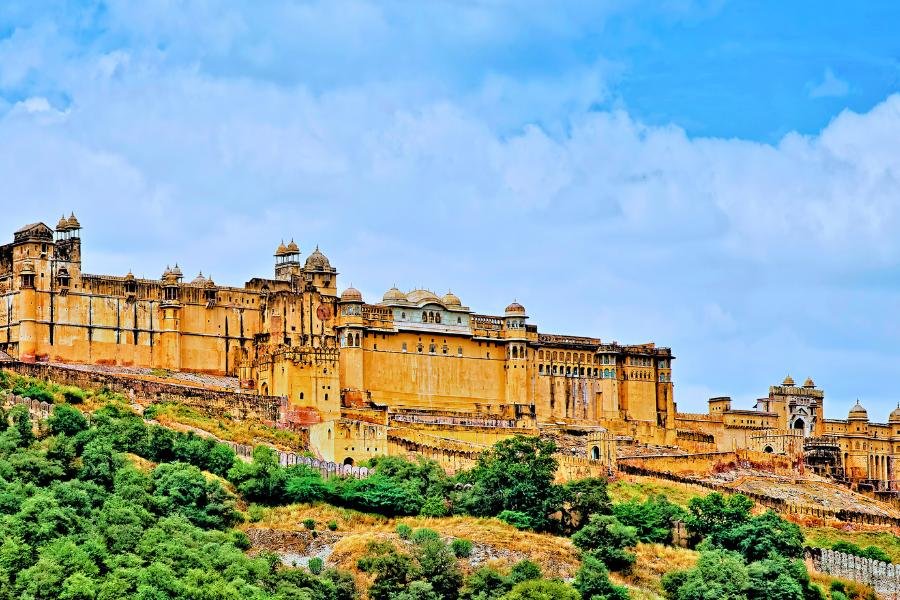
Begin your Jaipur sightseeing with Amber Fort, located outside the central part of the city. The fort sits dramatically against the surrounding hills and is one of the most impressive architectural experiences in the region. Give yourself enough time here because the complex is much larger than it appears in photographs.
Back in the city, visit the City Palace, which offers insight into Jaipur's royal history and continues to be associated with the former ruling family. The nearby Hawa Mahal, with its distinctive honeycomb-like façade, is one of Jaipur's most recognizable landmarks.
Jantar Mantar is another important stop for travelers interested in science and architecture. The historic astronomical observatory contains large-scale instruments designed to measure celestial positions and calculate astronomical information.
Do not make your Jaipur itinerary entirely about monuments, though. Spend some time walking through markets and exploring local crafts. Jaipur is famous for textiles, jewelry, blue pottery, block printing, and other traditional products. Shopping can become part of the cultural experience when you take time to understand how products are made rather than simply buying souvenirs.
Choose the Right Transportation
Transportation can make or break your itinerary. If you are comfortable managing schedules, trains can be an excellent way to connect Delhi, Agra, and Jaipur. They can save time and often provide a more relaxed experience than dealing with highway traffic.
A private car with a driver is ideal if convenience is your top priority. You can customize departure times, stop for photographs, visit attractions between cities, and avoid repeatedly arranging local transportation. This option is especially useful for families, older travelers, and groups traveling together.
Buses are generally useful for budget-conscious travelers, but they may offer less flexibility. If you are traveling independently, compare the total journey time rather than looking only at the ticket price. A slightly more expensive option that saves several hours can sometimes provide better overall value.
For a first trip, think of transportation as part of the itinerary rather than simply a way to move from one hotel to another. The best choice is the one that matches your budget, comfort level, and available time.
Pick the Best Time to Travel
The weather should play an important role in planning. For many travelers, October through March is the most comfortable period for exploring Delhi, Agra, and Jaipur because daytime temperatures are generally more suitable for extensive outdoor sightseeing.
Winter mornings can be cool, particularly in Delhi and Agra, and fog can occasionally affect visibility and transportation. Carry layers so you can adapt throughout the day. By contrast, the summer months can become extremely hot, making afternoon sightseeing uncomfortable, particularly around large open monuments.
The monsoon season can bring rain and higher humidity. Rain does not necessarily mean you should cancel a trip, and it can even create dramatic skies and fewer crowds, but you should build some flexibility into your schedule.
Regardless of season, start major outdoor sightseeing early whenever possible. The combination of better light, cooler temperatures, and potentially smaller crowds makes mornings valuable.
Create a Realistic Budget
Your budget will depend heavily on your hotel category, transportation, meals, guide services, entrance tickets, and shopping. Instead of creating one fixed number for every traveler, divide your spending into categories.
| Expense | Budget Approach | Comfortable Approach | Premium Approach |
|---|---|---|---|
| Hotels | Simple guesthouses/budget hotels | 3–4 star hotels | Luxury heritage hotels |
| Transport | Trains and buses | Trains/private transfers | Private car and driver |
| Food | Local restaurants | Mix of local and hotel dining | Premium restaurants |
| Guides | Selective | Private guides at major sights | Private guides throughout |
| Shopping | Limited souvenirs | Handicrafts and textiles | Premium crafts and jewelry |
Entrance fees should also be included in your calculations. Because ticket prices, opening arrangements, and transportation costs can change, verify current rates before your trip.
It is also wise to keep an emergency allowance. Unexpected taxi rides, last-minute hotel changes, additional meals, or small purchases can quickly add up. A realistic travel budget is not about predicting every rupee; it is about giving yourself enough flexibility that an unexpected expense does not ruin the experience.
Book Hotels in Convenient Locations
Hotel location can matter almost as much as hotel quality. In Delhi, choose an area with convenient access to the attractions and transportation services you intend to use. In Agra, staying reasonably close to the Taj Mahal can make an early morning visit much easier.
In Jaipur, consider whether you want to stay near the historic center, a major road, or a quieter hotel district. A beautiful hotel that is inconveniently located can result in long drives and unnecessary traffic delays.
You do not necessarily need the most expensive hotel to have a great trip. A clean, comfortable property in a convenient location can be more useful than a luxury hotel that adds an hour of driving to every sightseeing day.
Add Ranthambore If You Have More Time
Travelers with seven or more days can consider extending the classic circuit with Ranthambore National Park. This adds a completely different dimension to the journey because you move from historic cities and architectural landmarks into a wildlife destination.
A possible extended route is Delhi → Agra → Jaipur → Ranthambore. You could then continue toward another Rajasthan destination or return toward Delhi depending on your onward travel arrangements.
Ranthambore works particularly well for travelers who want variety. Imagine spending one morning photographing Mughal architecture and another morning searching for wildlife from an open safari vehicle. It is almost like combining several different holidays into one journey.
However, do not add Ranthambore simply because it sounds interesting. Wildlife sightings are never guaranteed, and the park requires additional travel time. If your main goal is architecture and culture, staying longer in Jaipur or adding another heritage destination may make more sense.
Make the Trip Comfortable for First-Time Visitors
If this is your first visit to India, give yourself permission to slow down. India can be intense, exciting, noisy, colorful, and wonderfully unpredictable. Trying to control every minute can turn an enjoyable holiday into a checklist.
Start your days early, stay hydrated, wear comfortable footwear, and take breaks during long sightseeing sessions. Keep copies of important travel information and use reputable transportation providers. When shopping, compare prices and understand exactly what you are purchasing before paying.
Food is another major part of the experience. Try local dishes, but choose restaurants with good hygiene standards, particularly if your stomach is not accustomed to Indian cuisine. Bottled or properly filtered water is the safest choice for many international travelers.
A good itinerary also leaves room for spontaneity. Maybe you discover a beautiful handicraft shop, meet a local guide who recommends a lesser-known viewpoint, or find a restaurant that becomes the unexpected highlight of your evening. Those moments are often what you remember long after the photographs have been organized.
A Simple Seven-Day Plan
If you have a full week, you can make the journey considerably more relaxed.
Spend the first two days in Delhi, using one day for Old Delhi and central historic attractions and another for New Delhi and southern monuments. On day three, travel to Agra and explore Agra Fort or another attraction after checking into your hotel.
Use day four for an early Taj Mahal visit, followed by additional Agra sightseeing before traveling toward Jaipur. If you want to visit Fatehpur Sikri, this is a convenient day to include it.
Spend days five and six exploring Jaipur. Dedicate one day to Amber Fort, City Palace, Hawa Mahal, and Jantar Mantar, then use the second day for markets, museums, local neighborhoods, and experiences that interest you personally.
On day seven, return to Delhi or continue to your next destination. This version of the route gives you enough time to appreciate each city without constantly watching the clock.
What Should You Avoid?
The biggest mistake is trying to see everything. Delhi alone could occupy several days, and Jaipur has enough attractions to justify an extended stay. Adding too many monuments simply because they appear on a tourist map can leave you exhausted.
Another mistake is ignoring travel time. A destination may appear close geographically, but traffic, road conditions, railway schedules, security checks, and sightseeing queues can change your actual timetable.
Do not depend entirely on information from old travel blogs. Monument schedules, ticket rules, hotel prices, transportation services, and local regulations can change. Check official sources shortly before departure, particularly for major attractions such as the Taj Mahal.
Finally, avoid planning your entire trip around photographs. The Taj Mahal is extraordinary, but so are the stories, people, architecture, food, crafts, and everyday scenes you encounter between the major landmarks.
Conclusion
A well-designed Golden Triangle Tour from Delhi is one of the easiest ways to experience several sides of northern India during one trip. The classic Delhi–Agra–Jaipur route combines the energy and history of the capital, the magnificent Mughal heritage of Agra, and the royal culture of Rajasthan in a journey that can work in five days or expand comfortably into a week or longer. Start by deciding how much time you have, choose transportation that matches your priorities, reserve conveniently located hotels, and keep your daily sightseeing realistic.
For a short trip, concentrate on the highlights. With more time, add experiences such as Fatehpur Sikri, Ranthambore, local markets, food tours, or additional Rajasthan destinations. Most importantly, allow yourself time to enjoy the journey between the landmarks. The best itinerary is not necessarily the one with the most attractions—it is the one that lets you experience each destination without constantly feeling rushed.
FAQs
1. How many days are enough for a Golden Triangle trip from Delhi?
Five days is enough for the major highlights of Delhi, Agra, and Jaipur, but six or seven days is more comfortable. Extra days allow you to explore the cities at a slower pace and add destinations such as Fatehpur Sikri or Ranthambore.
2. What is the best route for a Golden Triangle trip?
The traditional route is Delhi → Agra → Jaipur → Delhi. You can also finish in Jaipur if your onward travel plans make that more convenient.
3. Should I travel by train or private car?
Trains are excellent when saving time and money is important. A private car is better when you value flexibility, comfort, and the ability to stop at attractions between cities.
4. Can I visit the Taj Mahal and Agra Fort on the same day?
Yes. The two attractions are close to each other, making them easy to combine. Check current opening information and plan your Taj Mahal visit carefully, especially if your trip falls on a Friday or a public holiday.
5. Can I add Ranthambore to the itinerary?
Yes. Ranthambore is a popular extension for travelers with additional time. Ideally, allow at least two extra days so the wildlife experience does not make the rest of your itinerary unnecessarily rushed.