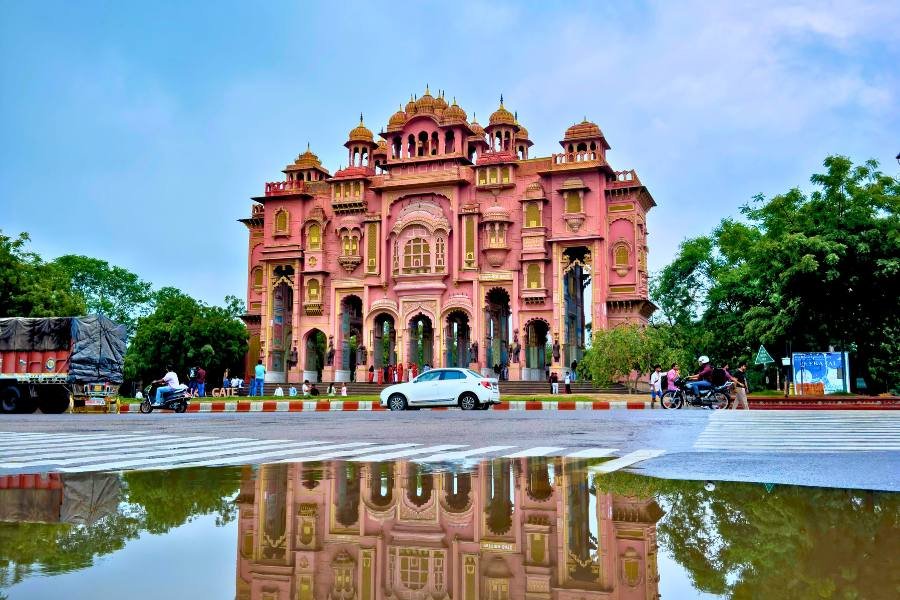
A Jaipur One Day Tour from Delhi is one of the most exciting ways to experience Rajasthan when you have limited time. Jaipur, popularly known as the Pink City
Jaipur One Day Tour From Delhi: Complete Travel Guide
A Jaipur One Day Tour from Delhi is one of the most exciting ways to experience Rajasthan when you have limited time. Jaipur, popularly known as the Pink City, combines grand forts, royal palaces, colorful markets, historic observatories, and distinctive Rajasthani culture in a compact destination. Although a single day cannot reveal every corner of the city, careful planning allows you to visit the most important attractions without spending your entire trip sitting in traffic. The key is to start early, choose attractions that are geographically practical, and keep enough flexibility for meals, photographs, and unexpected delays.
Traveling from Delhi to Jaipur can be done by train, private car, bus, or an organized tour. For travelers who value convenience and flexibility, a private car is particularly useful because you can leave Delhi early, reach Jaipur in the morning, move directly between attractions, and return to Delhi after sightseeing. Travelers who prefer rail travel can also choose a suitable train and arrange local transportation in Jaipur. Whichever option you select, the most important part of the journey is not trying to see everything. Instead, build your day around Amber Fort, City Palace, Jantar Mantar, Hawa Mahal, and Jal Mahal, while treating shopping or additional monuments as optional.
Why Choose a One-Day Jaipur Trip From Delhi?
Jaipur is an excellent destination for a short trip because many of its best-known attractions can be connected into a logical sightseeing route. The city was founded by Maharaja Sawai Jai Singh II and is famous for its planned streets, pink-colored historic buildings, royal architecture, and strong connection with Rajasthan's artistic traditions. Rajasthan Tourism identifies Amber Palace, City Palace, Jantar Mantar, Hawa Mahal, and Albert Hall among Jaipur's major attractions.
A day trip also fits naturally into a wider Golden Triangle journey. Delhi, Agra, and Jaipur are frequently combined because each city offers a different historical and cultural experience. Delhi introduces travelers to India's capital and its layered history, Agra is famous for the Taj Mahal and Mughal heritage, while Jaipur provides an introduction to Rajput architecture and Rajasthan's royal traditions.
The main advantage of a one-day trip is efficiency. You can experience Jaipur's major highlights without committing to another hotel night. The disadvantage is that the schedule can become tight, especially if you travel from Delhi by road. For this reason, an early departure and a private or carefully planned transportation arrangement can make a significant difference.
Best Time to Start From Delhi
For a day trip, starting early is one of the most important decisions you can make. Leaving Delhi around 5:00 or 6:00 AM gives you a better chance of reaching Jaipur during the morning, leaving several useful hours for sightseeing. Traffic conditions can change considerably, so the journey should always include a reasonable buffer rather than being planned around an exact arrival minute.
If you are traveling by private car, an early morning departure also makes the journey more comfortable. You can stop briefly for breakfast along the way or carry something with you and have a proper meal after reaching Jaipur. This allows you to use the first part of the day for sightseeing rather than spending your best sightseeing hours on the highway.
The season matters as well. Rajasthan can become very hot during summer afternoons, so an early start is especially helpful between the hotter months. Winter mornings can be cooler and sometimes hazy, but daytime sightseeing can be pleasant. Spring and autumn generally provide comfortable conditions, although weather varies from year to year.
How to Travel From Delhi to Jaipur
There are several practical ways to travel between Delhi and Jaipur. Your choice should depend on your budget, group size, preferred departure time, and how much flexibility you want once you reach Jaipur.
A private car is particularly convenient for a day trip because the vehicle can remain with you throughout the journey. You do not have to find separate transportation after arriving in Jaipur, and you can adjust the sightseeing order if traffic or attraction queues change your schedule.
A train can be a good option for travelers who prefer rail travel. It can reduce the stress of driving and allows you to relax during the journey. However, you will still need local transportation in Jaipur, so consider the complete door-to-door schedule rather than comparing train travel time alone.
Buses are another possibility, particularly for budget-conscious travelers, but they may offer less flexibility for a tightly planned sightseeing day. Organized tours can simplify transportation and sightseeing arrangements, especially for first-time visitors who prefer having a driver and itinerary already arranged.
Jaipur One Day Tour Itinerary at a Glance
| Approximate Time | Activity |
|---|---|
| 5:00–6:00 AM | Depart Delhi |
| 9:30–10:00 AM | Arrive in Jaipur |
| 10:00–12:00 PM | Explore Amber Fort |
| 12:15–12:45 PM | Photo stop at Jal Mahal |
| 1:00–2:00 PM | Lunch |
| 2:15–3:30 PM | City Palace |
| 3:30–4:15 PM | Jantar Mantar |
| 4:30–5:00 PM | Hawa Mahal |
| 5:00–6:00 PM | Optional shopping or local sightseeing |
| Evening | Depart Jaipur for Delhi |
The times above are a practical framework rather than a guarantee. Actual travel time depends on your departure point in Delhi, road conditions, attraction queues, weather, and how long you spend at each monument. Rajasthan Tourism Development Corporation currently advertises a full-day Jaipur sightseeing bus covering Amber Fort, City Palace, Jantar Mantar, Hawa Mahal, Jal Mahal, Nahargarh Fort, Jaigarh Fort, Birla Mandir, and other locations, illustrating how many major sights can be combined into a structured day.
Morning: Explore Amber Fort
Your first major Jaipur attraction should be Amber Fort, also commonly written as Amer Fort or Amber Palace. Located roughly 11 kilometers from central Jaipur, the hilltop complex is one of Rajasthan's most famous heritage attractions. Rajasthan Tourism describes Amber Palace as a UNESCO World Heritage Site and highlights its combination of Hindu and Mughal architectural influences.
Arriving in the morning makes sense for both practical and visual reasons. You can explore the fort before the strongest afternoon heat and then continue toward central Jaipur. The complex includes courtyards, audience halls, palace rooms, gardens, gateways, temples, and decorative interiors. The famous Sheesh Mahal, or Mirror Palace, is one of the features many visitors particularly enjoy.
Rajasthan Tourism currently lists Amber Palace visiting hours as 8:00 AM to 5:30 PM. Because attraction schedules and visitor arrangements can change, checking official information before traveling is sensible.
Allow approximately two hours for Amber Fort. If you are fascinated by architecture or history, you may want longer. If you are primarily interested in seeing the highlights and taking photographs, a shorter visit may be sufficient.
What Makes Amber Fort Special?
Amber Fort feels different from the palaces you encounter in central Jaipur because of its dramatic hillside setting. The fort overlooks Maota Lake and combines defensive walls with elaborate royal interiors. Rajasthan Tourism describes the complex as being built with red sandstone and white marble and notes its courtyards, royal quarters, gardens, temples, and other architectural features.
Inside, look for the contrast between the imposing exterior and the detailed palace spaces. Rajput architectural elements appear alongside Mughal-inspired decoration, reflecting the cultural and political relationships that shaped the region's history. The result is a complex that feels both fortified and luxurious.
If you enjoy photography, give yourself time to look beyond the main palace entrance. The surrounding hills, Maota Lake, courtyards, gateways, and palace details offer numerous compositions. However, remember that a one-day trip requires discipline. It is easy to spend half the morning taking photographs at Amber Fort and then find yourself rushing through the rest of Jaipur.
Jal Mahal Photo Stop
After Amber Fort, continue toward Jal Mahal, the picturesque palace situated in the middle of Man Sagar Lake. You generally do not need a long visit here for a first-time Jaipur day trip. A short stop at the appropriate viewpoint can provide excellent photographs and a refreshing change of pace after walking through the fort.
Jal Mahal is particularly attractive because of its unusual setting. Rather than standing on a hill or inside the walled city, the palace appears to float on the lake. The surrounding Aravalli landscape adds to the scene, making this one of the easiest places to capture a memorable Jaipur photograph without spending a large amount of time.
Keep this stop short if your schedule is tight. The purpose is to enjoy the view rather than turn a brief photo opportunity into a long sightseeing session.
Lunch in Jaipur
After visiting Amber Fort and Jal Mahal, take a proper lunch break. Jaipur offers everything from traditional Rajasthani cuisine to North Indian, international, vegetarian, and contemporary restaurant options. If you want to experience local flavors, look for dishes such as dal baati churma, gatte ki sabzi, ker sangri, or other regional specialties.
A one-day traveler should balance culinary exploration with time. A relaxed 45- to 60-minute lunch is usually enough before continuing toward the historic center. If you are traveling with children or older family members, allow extra time so the day does not feel like a race.
Food is also one of the easiest ways to make a short Jaipur trip feel more complete. You are not simply moving between monuments; you are experiencing Rajasthan through its architecture, streets, flavors, crafts, and hospitality.
Afternoon: Visit City Palace
After lunch, head toward City Palace, located within Jaipur's historic walled city. Rajasthan Tourism explains that the complex was conceived and built by Maharaja Sawai Jai Singh II, the founder of Jaipur, and that it combines Mughal and Rajput architectural influences.
City Palace contains courtyards, gateways, museums, royal residences, decorative halls, and collections associated with Jaipur's ruling family. The complex is particularly interesting for visitors who want to understand how Jaipur's royal household lived and governed rather than simply seeing a monumental fort.
Take your time in the museum areas, where collections can include royal clothing, textiles, arms, paintings, and other objects. Rajasthan Tourism specifically highlights Mubarak Mahal and the Maharani's Palace as parts of the complex, with displays including royal costumes, shawls, saris, weapons, and paintings.
Allow around 60 to 90 minutes for City Palace. If you enjoy museums, you may want more time, but remember that Jantar Mantar and Hawa Mahal are still waiting on your route.
Explore Jantar Mantar
Jantar Mantar is located close to City Palace, making it one of the most convenient attractions to add to your afternoon schedule. It is a UNESCO World Heritage Site and was created by Maharaja Sawai Jai Singh II, whose interest in astronomy influenced the design of Jaipur itself. Rajasthan Tourism describes Jaipur's Jantar Mantar as the largest of the five astronomical observatories built by Jai Singh II.
The observatory contains large geometric instruments designed for astronomical measurements. At first glance, some structures can look like enormous abstract sculptures, but each was created for a specific scientific purpose. This is what makes Jantar Mantar particularly memorable: it connects architecture, mathematics, astronomy, and royal history.
Even travelers who are not particularly interested in astronomy can appreciate the scale and precision of the instruments. A guide can be useful here because understanding what the instruments were designed to measure makes the visit much more meaningful.
Hawa Mahal: Jaipur's Most Recognizable Landmark
No Jaipur One Day Tour feels complete without seeing Hawa Mahal. The Palace of Winds is one of Jaipur's most recognizable buildings and is especially famous for its honeycomb-like façade filled with small windows and jharokhas. Rajasthan Tourism explains that the five-storey structure was built in 1799 by Sawai Pratap Singh and was designed so royal women could observe street life without being seen.
The exterior is the image most travelers associate with Jaipur. You can take photographs from the street opposite the palace, and if your schedule allows, you can also enter the building to see its interior spaces and views over the historic city.
Hawa Mahal is located in the heart of the old city, making it an excellent final monument before shopping or beginning the journey back toward Delhi. Because the building is visually striking, even a relatively short stop can be rewarding.
Shopping in the Pink City
If you have approximately an hour available after the major monuments, consider exploring Jaipur's markets. The old city is known for textiles, jewelry, handicrafts, block-printed fabrics, blue pottery, leather products, traditional footwear, and other Rajasthani goods.
Shopping should remain optional on a one-day itinerary. If traffic or attraction queues have already delayed you, it is better to leave Jaipur comfortably than to spend your final hour bargaining over souvenirs and then worry about the return journey.
If you do shop, compare prices and craftsmanship before making a purchase. Handmade products can vary significantly in quality, and tourist-oriented shops may charge different prices from local markets. A reputable guide or driver can help you understand where particular crafts are commonly sold, but you should make your own purchasing decisions.
Can You Visit Nahargarh Fort in One Day?
Nahargarh Fort is a popular Jaipur attraction, particularly for its elevated views across the city. However, adding it to a Delhi-to-Jaipur day trip requires careful timing. The fort sits away from the core City Palace–Jantar Mantar–Hawa Mahal route, so visiting it can increase driving time.
If you are particularly interested in panoramic views and are willing to reduce time at another attraction, Nahargarh can be considered. Otherwise, keep the classic route focused on Amber Fort, City Palace, Jantar Mantar, and Hawa Mahal.
This is one of the most important principles for a short trip: do not confuse more attractions with a better itinerary. Four well-enjoyed sights can create a much better travel memory than eight rushed stops.
Can You Visit Jaigarh Fort Too?
Jaigarh Fort is another impressive attraction in the Jaipur region, and it can appeal to travelers interested in military architecture, fortifications, and panoramic scenery. Because it is relatively close to Amber Fort, some visitors combine the two.
However, combining Jaigarh, Amber, Nahargarh, City Palace, Jantar Mantar, and Hawa Mahal in a single day can become exhausting. If you want to visit Jaigarh, consider removing one of the other optional attractions. Your itinerary should be built around your interests rather than an attempt to collect every monument in Jaipur.
Travel Tips for a Jaipur Day Trip From Delhi
A successful Jaipur One Day Tour depends as much on logistics as sightseeing. Start early, keep your luggage minimal, wear comfortable shoes, and carry water and sun protection. Jaipur involves walking through forts, courtyards, markets, and palace complexes, so comfortable footwear can make a surprisingly large difference.
Keep some flexibility in your schedule. Road traffic, parking, security checks, and visitor queues can all change the amount of time you need at each location. If your return to Delhi is important because you have another commitment the next morning, leave Jaipur with a substantial buffer rather than planning your departure at the last possible moment.
It is also useful to check official attraction information before traveling. Rajasthan Tourism currently provides information on Jaipur's principal attractions, while RTDC publishes sightseeing-tour schedules and prices.
What to Wear in Jaipur
Comfortable clothing is ideal for a full day of sightseeing. During warmer months, lightweight fabrics, sunglasses, sunscreen, and a hat can help you manage the heat. During winter, mornings can be chilly, so layers are useful because temperatures may become warmer later in the day.
Comfortable walking shoes are essential. Amber Fort in particular involves stairs and uneven surfaces, while City Palace and Jantar Mantar require walking between different sections of the complexes.
If you plan to visit religious sites during your trip, modest clothing is a practical choice. It is also useful for general sightseeing because Jaipur is a culturally rich destination where respectful clothing is appreciated.
Best Time of Year for Jaipur
The cooler months are generally comfortable for sightseeing, especially for travelers who plan to spend several hours outdoors. Winter mornings can be cool, but daytime temperatures can become pleasant. The hotter months can make an afternoon fort visit considerably more tiring.
The monsoon period can bring rain and changes in road conditions, although it can also transform the landscape around Jaipur. Because weather patterns vary, check the forecast close to your travel date rather than relying entirely on seasonal averages.
Whatever month you choose, the most useful strategy is to put the most physically demanding attraction earlier in the day. Amber Fort is therefore an excellent morning stop.
Jaipur One Day Tour Cost
The total price of a Delhi-to-Jaipur day trip depends heavily on your transportation and group size. A private car can be more economical per person when traveling as a family or small group, while solo travelers may find public transportation or group tours more budget-friendly.
Your overall budget may include:
Delhi–Jaipur transportation
Private driver or local vehicle
Monument entrance fees
Guide fees, if required
Breakfast and lunch
Parking and tolls
Shopping and souvenirs
As a reference point, RTDC currently lists a full-day Jaipur sightseeing bus at ₹600 per person on its city-tour information, with monument entrance fees, camera fees, and Jeep charges at Amber Fort excluded. Private tour prices will naturally differ according to vehicle size, pickup location, inclusions, season, and service level.
Rather than choosing a tour only by its headline price, compare what is included. A low-cost tour that excludes transportation, monument tickets, or important services may ultimately cost more than expected.
Private Car vs Train for a Jaipur Day Trip
| Factor | Private Car | Train |
|---|---|---|
| Flexibility | Very high | Limited to train schedule |
| Local sightseeing | Vehicle stays with you | Separate local transport required |
| Comfort | Private space | Depends on train/class |
| Best for families | Often convenient | Can be convenient |
| Stops along the way | Possible | Not practical |
| Schedule control | High | Fixed |
| Planning effort | Lower after booking | Requires local transport planning |
There is no universal answer because the best transportation depends on your travel style. A private car is particularly useful if you want to visit several attractions in a specific order. Train travel can be attractive if you prefer rail journeys and want to avoid a long drive.
Should You Hire a Jaipur Guide?
A guide can add considerable value at Amber Fort, City Palace, and Jantar Mantar because these places contain layers of history and architectural details that are not always obvious. Instead of simply seeing a beautiful courtyard, you can learn why it was built, who used it, and how it fits into Jaipur's history.
If you prefer independent travel, you can explore using official information and your own research. If you want deeper historical context, a knowledgeable guide can make the experience more engaging.
For a one-day trip, a guide can also help with time management because they are familiar with the route and can explain which sections are most important when your schedule is limited.
Common Mistakes to Avoid
The biggest mistake is trying to visit too many attractions. Jaipur is larger than it looks on a map, and every extra stop introduces another journey, parking situation, and time requirement.
Another mistake is leaving Delhi too late. A late start can push Amber Fort into the hottest part of the day and leave you rushing through the central attractions.
Travelers should also avoid ignoring the return journey. Delhi traffic can be unpredictable, so leaving Jaipur early enough to accommodate delays is much safer than planning to arrive back in Delhi at exactly the time you need to be home.
Finally, do not spend the entire day looking through your camera screen. Jaipur's architecture, colors, markets, and landscapes are much more enjoyable when you occasionally put the phone away and simply experience the city.
A Relaxed Alternative Itinerary
If you prefer a slower day, use a four-attraction plan:
Morning: Amber Fort
Late morning: Jal Mahal photo stop
Lunch: Local Rajasthani or North Indian restaurant
Afternoon: City Palace and Jantar Mantar
Late afternoon: Hawa Mahal
Evening: Return to Delhi
This route leaves out Nahargarh and Jaigarh deliberately. It gives you more time at the attractions that are most closely associated with Jaipur's identity.
For travelers who prefer photography, architecture, and history, this approach can be particularly satisfying. You will see fewer locations, but each location receives more attention.
Is One Day Enough for Jaipur?
One day is enough to experience Jaipur's major highlights, but it is not enough to explore the city comprehensively. You can visit Amber Fort, see Jal Mahal, explore City Palace and Jantar Mantar, photograph Hawa Mahal, and enjoy a local meal. That is already a substantial introduction to the Pink City.
If you have two or three days, the experience becomes much more relaxed. You can add Nahargarh Fort, Jaigarh Fort, Albert Hall Museum, local markets, temples, cultural performances, and nearby destinations. You can also spend more time simply walking through the historic streets rather than moving from one attraction to another.
The decision comes down to your travel schedule. If Jaipur is one stop within a larger India trip, one day can work. If Rajasthan is your main destination, staying longer will allow you to experience the city beyond its most famous photographs.
Final Jaipur Day Trip Checklist
Before leaving Delhi, confirm your transportation, check attraction information, charge your phone, carry identification, wear comfortable shoes, and bring only the essentials. Keep a little cash available for small purchases and local expenses, although digital payments are widely used in urban India.
Most importantly, decide in advance which attractions are non-negotiable. If Amber Fort and City Palace are your priorities, protect their time. If photography is your main interest, build the schedule around light and viewpoints. If history is your passion, consider hiring a guide.
A successful day trip is not about following a rigid timetable without deviation. It is about having a strong framework that allows you to make sensible adjustments during the day.
Conclusion
A well-planned Jaipur One Day Tour from Delhi can introduce you to the royal architecture, history, food, and colorful atmosphere of Rajasthan without requiring a long stay. Start early, make Amber Fort your first major attraction, continue through Jal Mahal and the historic center, and finish with City Palace, Jantar Mantar, and Hawa Mahal. This route covers many of Jaipur's defining experiences while keeping the sightseeing geographically sensible.
Rajasthan Tourism confirms the importance of Amber Palace, City Palace, Jantar Mantar, and Hawa Mahal among Jaipur's major attractions, while RTDC's current city-tour offerings demonstrate that several of these sites can be incorporated into a structured full-day sightseeing plan.
The biggest secret is knowing what not to include. You do not need to visit every fort, palace, museum, and market in Jaipur to have a memorable day. Choose the sights that interest you most, leave enough time between them, enjoy a proper Rajasthani meal, and keep a comfortable buffer for your return to Delhi. With the right planning, even a single day can give you a vivid introduction to the Pink City and leave you wanting to return for a longer Rajasthan adventure.
FAQs
1. Can I do a one-day Jaipur trip from Delhi?
Yes. Jaipur can be visited from Delhi in a single day if you start early and organize transportation and sightseeing efficiently. A private car provides the most flexibility, while trains can also work if their schedules align with your sightseeing plans.
2. What are the best places to visit in Jaipur in one day?
For a first visit, prioritize Amber Fort, City Palace, Jantar Mantar, Hawa Mahal, and Jal Mahal. If time permits, you can add shopping or another attraction such as Nahargarh Fort.
3. How early should I leave Delhi for Jaipur?
Leaving around 5:00–6:00 AM is a practical starting point for a day trip. The exact departure time depends on your location in Delhi, transportation method, road conditions, and the time you want to reach Amber Fort.
4. Is Jaipur worth visiting for only one day?
Yes, particularly if your goal is to see the city's major landmarks. One day provides an introduction to Jaipur's forts, palaces, observatory, markets, and distinctive architecture, although a longer stay allows a much more relaxed exploration.
5. Should I book a private Jaipur tour from Delhi?
A private tour can be useful when you want door-to-door transportation, flexible sightseeing, and a dedicated vehicle for the entire day. Compare the itinerary, vehicle, inclusions, monument tickets, guide services, meals, and cancellation terms before booking.