Planning a 4 Day Golden Triangle Tour from Delhi is an excellent way to explore three of India’s most celebrated destinations: Delhi, Agra, and Jaipur.
How to Plan a 4 Day Golden Triangle Tour from Delhi?
Planning a 4 Day Golden Triangle Tour from Delhi is an excellent way to explore three of India’s most celebrated destinations: Delhi, Agra, and Jaipur. This classic travel route combines historic monuments, Mughal architecture, royal palaces, colorful markets, local cuisine, and vibrant cultural experiences in one well-organized journey.
A four-day itinerary gives travelers more breathing room than a shorter Golden Triangle trip. You can explore Delhi without rushing, spend quality time visiting the Taj Mahal and Agra Fort, and enjoy Jaipur’s forts, palaces, and traditional bazaars. With sensible planning, the journey can be comfortable while still covering the major attractions.
This guide explains how to plan your trip from Delhi, what to see each day, how to travel between destinations, where to stay, what to pack, and how to make the most of your time.
What Is the Golden Triangle of India?
The Golden Triangle is one of India's most popular tourist circuits, connecting Delhi, Agra, and Jaipur. These three cities form a roughly triangular route and offer a fascinating introduction to northern India's history and culture.
Delhi is the usual starting point for international and domestic travelers. It combines historic landmarks with modern neighborhoods, restaurants, shopping areas, and museums.
Agra is famous worldwide for the Taj Mahal, one of India's most recognizable monuments. The city also has other important Mughal attractions, including Agra Fort.
Jaipur, the capital of Rajasthan, introduces travelers to the architectural and cultural traditions of the former Rajput kingdoms. Amber Fort, City Palace, Jantar Mantar, and Hawa Mahal are among its best-known attractions.
A four-day itinerary provides enough time to experience the highlights of all three destinations without trying to visit every attraction.
Why Choose a 4 Day Golden Triangle Tour?
A four-day schedule works particularly well for travelers who want a balance between sightseeing and relaxation. Very short Golden Triangle itineraries can involve long sightseeing days and frequent travel, whereas four days allow the itinerary to be distributed more comfortably.
The route can typically be arranged as:
- Day 1: Delhi sightseeing
- Day 2: Delhi to Agra and Agra sightseeing
- Day 3: Agra to Jaipur with sightseeing
- Day 4: Jaipur sightseeing and return to Delhi
This structure minimizes unnecessary backtracking and allows you to experience the major attractions of each city.
Another advantage is flexibility. Depending on your arrival time, you can adjust the Delhi sightseeing schedule. Similarly, you can visit the Taj Mahal early in the morning before continuing toward Jaipur.
Day 1: Explore Delhi
Begin your journey in Delhi. If you arrive early enough, dedicate your first day to exploring some of the city's most important landmarks.
Delhi is divided broadly into areas associated with Old Delhi and New Delhi, and each provides a different experience.
India Gate and New Delhi
Start with the major landmarks of central New Delhi. India Gate is a prominent war memorial surrounded by broad avenues and green spaces.
Nearby areas include important government buildings and historic structures. Driving through central Delhi can provide an introduction to the city's modern administrative district.
Humayun's Tomb
Continue to Humayun's Tomb, a magnificent Mughal-era monument. Built in the 16th century, the tomb is known for its symmetrical gardens, red sandstone architecture, and elegant domes.
The monument is historically significant because its architectural style influenced later Mughal structures, including elements associated with the Taj Mahal.
Qutub Minar
Another major Delhi attraction is Qutub Minar, a towering medieval minaret located within the Qutub complex.
The complex contains several historic structures and architectural remains. Allow sufficient time to walk around the site rather than simply stopping for photographs.
Old Delhi
In the afternoon, explore Old Delhi if time permits. Jama Masjid is one of the area's most recognizable historic mosques.
You can also experience the lively atmosphere around Chandni Chowk. The narrow streets are known for traditional shops, street food, spices, textiles, jewelry, and local markets.
A guided walk or rickshaw experience can make this part of Delhi easier to navigate.
Day 2: Delhi to Agra
Start Day 2 by traveling from Delhi to Agra. The road journey can take several hours depending on the transportation option and traffic conditions.
For many travelers, a private car is convenient because it allows greater flexibility with departure times and stops along the route.
Agra is located in Uttar Pradesh and was an important center during the Mughal period. The city is now internationally recognized because of its architectural heritage.
Visit the Taj Mahal
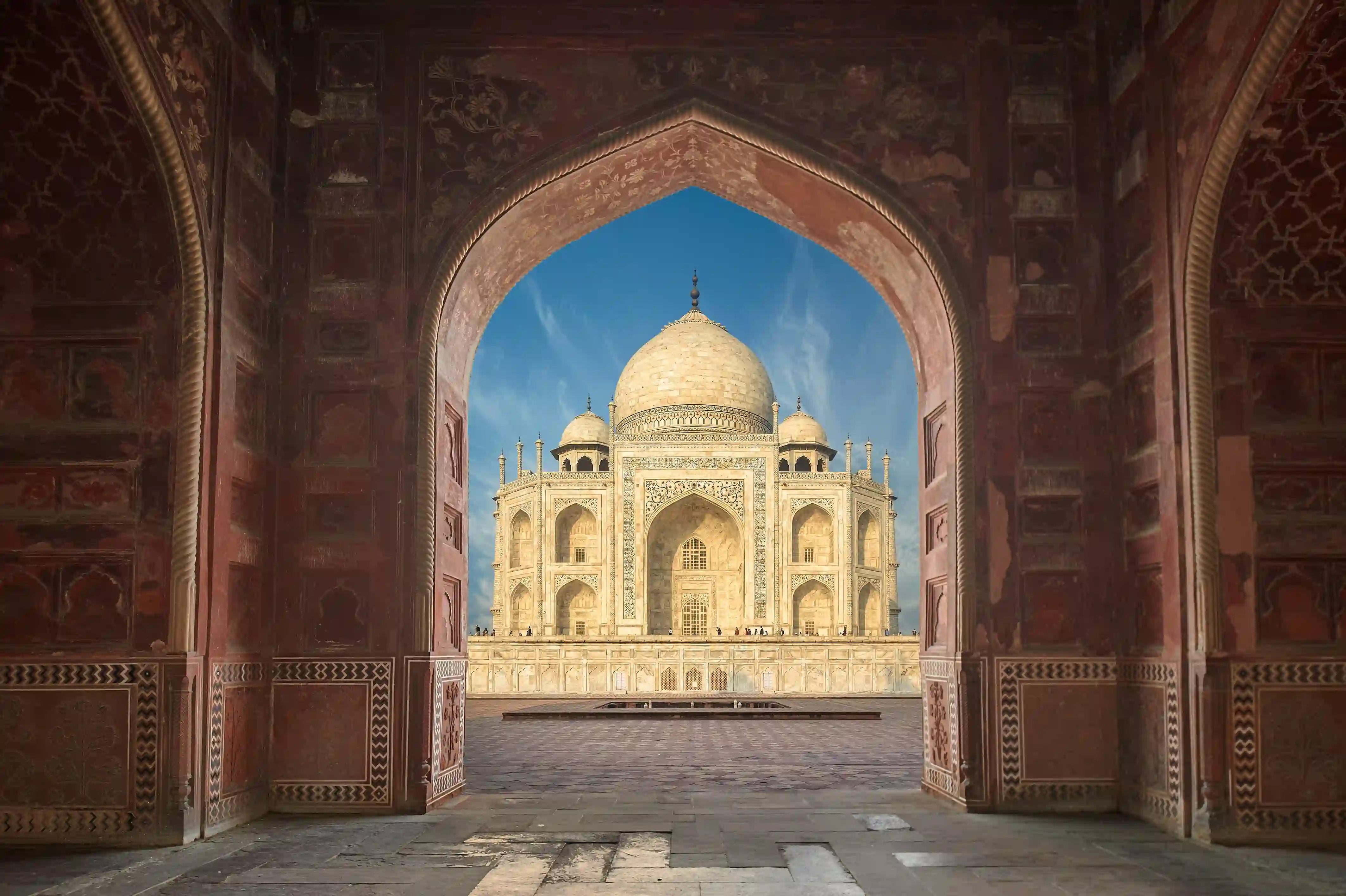
The highlight of your Agra visit is the Taj Mahal.
Commissioned by Mughal emperor Shah Jahan in memory of Mumtaz Mahal, the monument is renowned for its white marble architecture, intricate decorative work, gardens, and symmetrical design.
If your schedule allows, visiting around sunrise can provide a particularly memorable experience. Early morning can also be more comfortable during warmer periods.
Spend time exploring the monument and its surrounding complex rather than rushing through the visit.
Remember that visitor regulations, ticketing arrangements, and opening schedules can change, so check official information before your journey.
Explore Agra Fort
After the Taj Mahal, visit Agra Fort, another major Mughal monument.
The enormous red sandstone fort contains palaces, halls, courtyards, mosques, and other historic structures. From some areas of the fort, visitors can also see the Taj Mahal in the distance.
The fort helps explain the political and architectural history of Mughal Agra and complements a visit to the Taj Mahal.
Mehtab Bagh
If time permits, consider visiting Mehtab Bagh, a garden complex across the Yamuna River from the Taj Mahal.
It is particularly interesting for travelers who want another perspective of the monument and an opportunity for photographs.
You do not necessarily need to include every attraction in Agra. With only a few hours available, prioritizing the Taj Mahal and Agra Fort can make the day more manageable.
Day 3: Agra to Jaipur
Day 3 involves traveling from Agra to Jaipur. One advantage of the Golden Triangle route is that the journey between these destinations can be combined with sightseeing.
A popular stop along the way is Fatehpur Sikri, a historic city associated with the Mughal emperor Akbar.
Explore Fatehpur Sikri
Fatehpur Sikri contains impressive structures built primarily from red sandstone. The complex includes palaces, courtyards, religious buildings, and ceremonial spaces.
Because it is located between Agra and Jaipur, it can be a practical stop depending on your transportation arrangements and available time.
After exploring Fatehpur Sikri, continue toward Jaipur.
Arrive in Jaipur
Jaipur is known as the Pink City and is the capital of Rajasthan. Its architecture, traditional crafts, royal history, and colorful markets make it distinctly different from Delhi and Agra.
After checking into your hotel, you can relax or take an evening walk through a local market.
If you still have energy, explore some of the traditional shopping areas for textiles, handicrafts, jewelry, and souvenirs.
Day 4: Discover Jaipur
Start your final sightseeing day early so that you can visit Jaipur's major attractions before returning to Delhi.
Amber Fort
Begin with Amber Fort, located outside central Jaipur.
The fort sits on a hill and features courtyards, gateways, palaces, decorative halls, and views of the surrounding landscape.
Its architecture reflects a combination of Rajput and Mughal influences.
Plan enough time for the visit because the complex is extensive. Comfortable footwear is recommended.
City Palace
Return toward central Jaipur and visit the City Palace.
The palace complex contains courtyards, buildings, museums, and royal collections. It provides an opportunity to learn about Jaipur's former ruling family and the development of the city.
Jantar Mantar
Located close to the City Palace is Jantar Mantar, an astronomical observatory containing large-scale instruments designed for astronomical calculations.
The site demonstrates the scientific and architectural interests of the period and is a worthwhile addition to your Jaipur itinerary.
Hawa Mahal
No Jaipur itinerary would be complete without seeing Hawa Mahal, or the Palace of Winds.
Its distinctive facade contains numerous small windows and decorative elements. The monument is particularly popular for photographs.
You can combine a visit to Hawa Mahal with shopping and dining in the surrounding markets.
How to Travel During the Golden Triangle Tour
Transportation can have a major effect on the comfort of your trip.
Private Car
A private car with a driver provides flexibility. You can choose departure times, stop for meals, and adjust the itinerary according to your interests.
It is particularly useful for families, couples, and small groups.
Train
Trains can be an efficient option for some parts of the route, particularly between Delhi and Agra. However, you need to plan around train schedules and station transfers.
If you want maximum flexibility for sightseeing stops such as Fatehpur Sikri, a private vehicle may be more practical.
Flight
Flying between these destinations is generally less useful for a short Golden Triangle road itinerary because the cities are relatively close compared with many other Indian travel routes. Airport transfers and security procedures can also consume valuable sightseeing time.
Where Should You Stay?
Choosing centrally located hotels can reduce unnecessary travel.
In Delhi, consider staying in an area with convenient access to major attractions and transportation.
In Agra, staying near the Taj Mahal can make early-morning sightseeing easier.
In Jaipur, central areas provide convenient access to markets, restaurants, and major attractions.
Hotel selection should also consider cleanliness, guest reviews, transportation access, breakfast availability, and cancellation policies rather than focusing only on price.
Best Time for a Golden Triangle Tour
The cooler months are generally more comfortable for extensive sightseeing in Delhi, Agra, and Jaipur. Many travelers prefer the period from approximately October through March because daytime temperatures are usually more suitable for walking and outdoor exploration than the hottest months.
Winter mornings can sometimes be cool, especially in Delhi and Agra, so carry a light jacket or sweater.
Summer can be very hot, while the monsoon season may bring rain and increased humidity. However, travel preferences vary, and different seasons can have their own advantages.
Always check the expected weather shortly before departure.
What to Pack
Packing efficiently can make a four-day trip easier.
- Comfortable walking shoes
- Lightweight clothing
- A light jacket for cooler mornings
- Sunglasses
- Sunscreen
- Hat or cap
- Reusable water bottle
- Phone charger and power bank
- Basic medicines
- Identification documents
- Camera or smartphone
Modest clothing is useful when visiting religious and historic sites.
Food to Try Along the Route
The Golden Triangle is also a culinary journey.
In Delhi, you can try foods such as chole bhature, parathas, kebabs, butter chicken, and various street-food specialties.
Agra is known for Mughlai cuisine and its famous petha, a traditional sweet.
Jaipur offers Rajasthani dishes such as dal baati churma, gatte ki sabzi, ker sangri, and traditional sweets.
When trying street food, choose busy establishments with good hygiene practices, especially if you are not accustomed to local cuisine.
How to Make Your 4 Day Golden Triangle Tour Comfortable
Good planning is especially important when you have only four days.
First, avoid adding too many attractions to the schedule. Visiting fewer places properly is often more enjoyable than spending the entire trip rushing from one monument to another.
Second, start sightseeing early. Many major attractions are more comfortable to visit during the morning, particularly during warmer months.
Third, keep some flexibility in the schedule. Traffic, weather, delays, or unexpected circumstances can affect travel times.
Finally, keep important documents and booking details accessible throughout the journey.
Suggested Four-Day Itinerary
Here is a practical overview of the route:
| Day | Destination | Main Experiences |
|---|---|---|
| Day 1 | Delhi | India Gate, Humayun's Tomb, Qutub Minar, Old Delhi |
| Day 2 | Agra | Taj Mahal, Agra Fort, Mehtab Bagh |
| Day 3 | Agra to Jaipur | Fatehpur Sikri, travel to Jaipur, local markets |
| Day 4 | Jaipur | Amber Fort, City Palace, Jantar Mantar, Hawa Mahal, return to Delhi |
This itinerary can be adjusted according to your arrival time, hotel location, transportation, and personal interests.
How Much Time Should You Spend at Each Attraction?
Time management is important on a four-day journey.
In Delhi, allow several hours for the major monuments you choose to visit. Trying to cover every attraction in one day can make the experience tiring.
In Agra, prioritize the Taj Mahal and Agra Fort. Add Mehtab Bagh or another attraction if your schedule permits.
In Jaipur, Amber Fort deserves several hours, while the City Palace and Jantar Mantar can be combined during the same part of the day because they are located relatively close to each other.
Leave additional time for traffic, meals, hotel check-ins, and photography.
Is a Guided Tour Worth Considering?
A guide can provide historical context that you might miss when visiting monuments independently.
Professional guides can explain architectural details, historical events, royal traditions, and stories associated with major landmarks.
If you prefer independent exploration, you can also research each attraction beforehand and use official information available at the sites.
The best approach depends on whether you prefer structured sightseeing or greater independence.
Why a 4 Day Itinerary Works Well
A four-day itinerary creates a useful balance between sightseeing and travel. You have enough time to experience the major highlights while avoiding an excessively compressed schedule.
The route also provides a remarkable contrast between three cities. Delhi demonstrates the mixture of historic and contemporary India, Agra showcases Mughal heritage, and Jaipur introduces the royal traditions and colorful architecture of Rajasthan.
By planning your route in advance, booking suitable accommodation, and allowing enough time for transportation, you can create a smooth and memorable journey.
Final Thoughts
Planning a 4 Day Golden Triangle Tour from Delhi is a practical way to experience some of northern India's most famous destinations within a limited vacation period. From Delhi's historic monuments and lively streets to Agra's magnificent Taj Mahal and Jaipur's royal architecture, every day offers something different.
The key is not to overcrowd the itinerary. Focus on the most important attractions, begin sightseeing early, choose convenient transportation, and leave some flexibility for unexpected delays.
With thoughtful preparation, four days can provide a rewarding introduction to Delhi, Agra, and Jaipur while giving you memorable experiences of India's history, architecture, food, and culture.
Frequently Asked Questions
1. Can I complete the Golden Triangle in four days?
Yes. A four-day itinerary can cover the major highlights of Delhi, Agra, and Jaipur. A carefully organized route is important because travel time between cities takes a significant portion of the trip.
2. What is the best way to travel from Delhi to Agra?
Travelers can choose between road and rail depending on their priorities. A private car offers flexibility, while trains can be convenient for travelers who prefer scheduled transportation.
3. How long should I spend at the Taj Mahal?
Most visitors should allow sufficient time to explore the monument, gardens, and surrounding complex without rushing. The exact duration depends on your interests, photography plans, and crowd conditions.
4. Is Fatehpur Sikri worth visiting?
Fatehpur Sikri is an important historical site and can be included between Agra and Jaipur when travel arrangements allow enough time.
5. What should I see in Jaipur in one day?
Prioritize Amber Fort, City Palace, Jantar Mantar, and Hawa Mahal. If time permits, add a market visit or another attraction based on your interests.