A two-day journey is particularly useful for travelers who have limited time but still want to experience more than one destination.
What Are the Best 2-Day Agra and Jaipur Tour Packages from Delhi?
Planning a short trip from Delhi and want to experience two of North India's most famous destinations? 2-Day Agra and Jaipur Tour Packages can combine the Taj Mahal, Agra Fort, Amber Fort, City Palace, Hawa Mahal and other highlights into a compact itinerary. Agra and Jaipur are two major stops on India's Golden Triangle, and their contrasting histories make the journey especially rewarding. Agra showcases the architectural legacy of the Mughal Empire, while Jaipur introduces travelers to Rajasthan's royal heritage, colorful markets and impressive forts. With the right route, transportation and sightseeing schedule, two days can provide a memorable introduction to both cities without requiring a long vacation.
Why Choose a 2-Day Agra and Jaipur Tour from Delhi?
A two-day journey is particularly useful for travelers who have limited time but still want to experience more than one destination. Delhi is well connected to both Agra and Jaipur, making it possible to create a circular route rather than returning to Delhi after every sightseeing stop. The most practical sequence is generally Delhi → Agra → Jaipur → Delhi because it keeps the journey moving forward and avoids unnecessary backtracking. This approach allows you to dedicate the first day primarily to Agra and the second day to Jaipur before heading back to the capital.
The combination also gives you a fascinating change of atmosphere. Agra is closely associated with Mughal architecture and monuments such as the Taj Mahal and Agra Fort. Jaipur, meanwhile, is known for its Rajput heritage, fortified hilltop architecture, royal residences and distinctive pink-colored cityscape. Together, these destinations provide an excellent introduction to the history, architecture and culture of northern India.
What Can You See in Two Days?
The key is not trying to see absolutely everything. Instead, a well-planned itinerary concentrates on the most significant attractions. On the first day, travelers can leave Delhi early, visit the Taj Mahal and Agra Fort, have lunch, and then continue toward Jaipur. Depending on the departure time and traffic, the evening can be used for hotel check-in and a relaxed dinner.
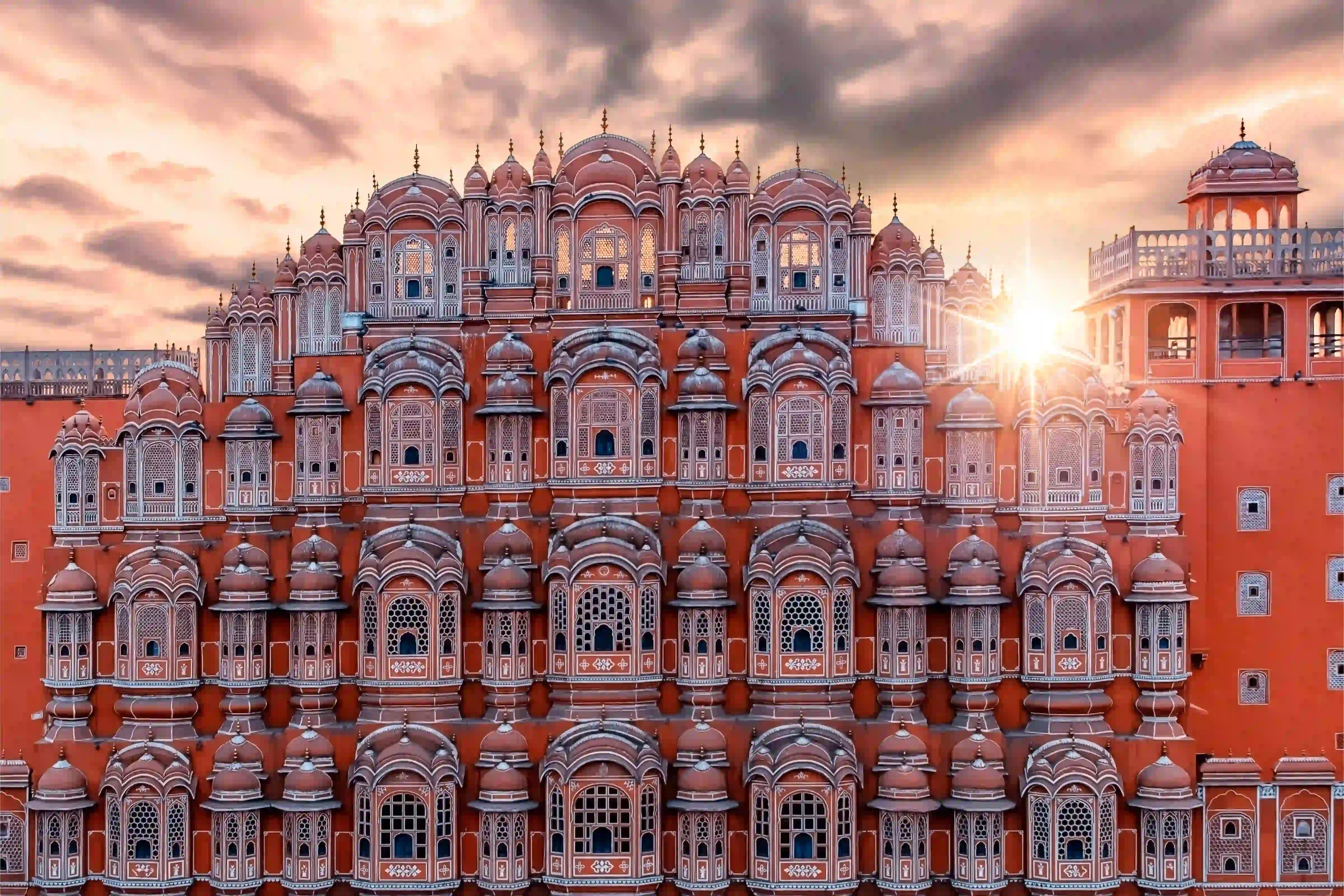
The second day can focus on Jaipur's principal landmarks, beginning with Amber Fort and continuing toward the City Palace and Hawa Mahal. Travelers with additional time can explore Jantar Mantar, local bazaars or other nearby attractions. The itinerary should leave enough room for travel between attractions because sightseeing becomes much less enjoyable when every minute is scheduled.
The Best Route: Delhi to Agra to Jaipur
The route itself is one of the most important parts of planning a short tour. Delhi to Agra is the first major section, followed by Agra to Jaipur and finally Jaipur to Delhi. Road travel gives visitors the flexibility to stop for meals, photographs and short breaks, while trains can be useful when travelers prefer predictable journey times.
For a private road tour, an early start from Delhi is especially important. The earlier you leave, the more sightseeing time you have in Agra. After exploring Agra, continuing to Jaipur means you can wake up in Rajasthan rather than spending valuable morning hours traveling from Delhi.
A private vehicle is often convenient for families, couples and small groups because the itinerary can be customized. A driver can also coordinate hotel transfers and sightseeing movements, reducing the need to arrange separate transportation in each city.
Day 1: Delhi to Agra Sightseeing
The first day should begin early in Delhi. After pickup from your hotel, airport or another agreed location, the journey continues toward Agra. Once you arrive, the Taj Mahal should normally be one of the first major sightseeing stops because it is the centerpiece of the city and deserves sufficient time.
Taj Mahal
The Taj Mahal is one of India's most recognizable monuments and a UNESCO World Heritage Site. The monument was commissioned by Mughal emperor Shah Jahan and built in memory of Mumtaz Mahal. Its white marble architecture, symmetrical gardens, reflecting pools and detailed decorative work make it particularly impressive in person. Visitors should allow enough time not only to see the main mausoleum but also to appreciate the surrounding complex and gardens.
Agra Fort
After the Taj Mahal, Agra Fort is a natural second stop. Located relatively close to the Taj Mahal, the fort provides a different perspective on Agra's Mughal history. Its enormous walls, courtyards, palaces and architectural details demonstrate how the city functioned as an important imperial center.
Lunch can be scheduled after the main morning sightseeing. Travelers can choose between a restaurant serving Indian cuisine, a hotel restaurant or another suitable dining option. After lunch, you can continue toward Jaipur, making the afternoon transfer part of the itinerary rather than losing another day to transportation.
Day 2: Jaipur Sightseeing
After spending the night in Jaipur, begin the second day with the city's major heritage attractions. Amber Fort is usually an excellent starting point because it is located outside the central city area and can require additional travel time. The fort's elevated setting and elaborate courtyards provide a strong introduction to Rajasthan's royal architecture.
Amber Fort, City Palace and Hawa Mahal
After Amber Fort, continue toward central Jaipur. The City Palace is an important stop for travelers interested in royal history, architecture and museums. Nearby, Hawa Mahal is one of Jaipur's most recognizable structures and is especially convenient to visit because of its location in the historic city center.
Jantar Mantar can also be included if your schedule permits. The astronomical observatory contains large-scale instruments designed for observing and calculating celestial positions. Together, these attractions create a balanced day combining architecture, history and science.
If shopping interests you, leave some time for Jaipur's markets. The city is known for textiles, handicrafts, jewelry, traditional clothing and decorative items. Rather than attempting to visit numerous markets, choose one area that fits your route and spend enough time browsing without making the schedule unnecessarily rushed.
Popular Types of 2-Day Tour Packages
Travel companies commonly structure short Agra-Jaipur trips around different transportation and accommodation preferences. 2-Day Agra and Jaipur Tour Packages may be available as private tours, group tours, car-based trips, train-based itineraries or customized packages.
A private package generally offers greater flexibility. Pickup and drop-off locations can often be adjusted, sightseeing can be personalized and travelers do not need to coordinate their schedule with a large group. This can be particularly useful for families traveling with children or older travelers who prefer a slower pace.
A group package may be more economical because transportation and other services are shared among travelers. However, group itineraries usually operate according to fixed schedules, so there may be less flexibility for extended photography stops, shopping or changes to sightseeing plans.
Some packages include one night of accommodation in Jaipur, while others may be designed for travelers who arrange their own hotel. Before booking, check exactly what the package includes rather than comparing only the headline price.
Private Car or Train: Which Works for a Short Tour?
Transportation can make a major difference during a two-day itinerary. A private car is particularly convenient because the vehicle remains available for transfers and sightseeing. You can leave Delhi early, visit Agra, travel onward to Jaipur and then explore Jaipur without repeatedly arranging taxis.
Train travel can also be practical, particularly for the Delhi-Agra section. India's railway network connects Delhi and Agra with multiple services, and travelers may prefer trains for speed and comfort. However, a train-based itinerary requires more coordination because you still need transportation between railway stations, hotels and monuments.
For a short trip, convenience is often more important than choosing transportation based solely on the lowest price. A slightly more expensive private itinerary can reduce transfers and waiting time, potentially giving you more usable sightseeing time.
What Is Usually Included?
Package inclusions vary considerably between operators, so travelers should read the details carefully. A typical private package may include hotel pickup and drop-off, private air-conditioned transportation, driver services, one hotel night, sightseeing assistance and tolls or parking charges.
Some packages may include breakfast, monument entrance tickets or a tour guide, while others may charge these separately. Meals can also differ. Before making a booking, ask for a written list of inclusions and exclusions.
- Hotel category and room type
- Private or shared transportation
- Driver charges
- Monument entrance fees
- Tour guide services
- Meals and breakfast
- Parking and toll charges
- Airport or hotel pickup
- Drop-off location
- Additional sightseeing stops
This simple check can prevent confusion later, particularly when comparing two packages that initially appear to have similar prices.
How Much Does a 2-Day Agra and Jaipur Tour Cost?
The cost depends on several variables, including vehicle type, hotel category, number of travelers, guide services, entrance fees and travel season. A couple traveling in a private sedan will have a different per-person cost from a family traveling in a larger vehicle. Similarly, a luxury hotel will substantially change the total compared with a standard or budget property.
For this reason, there is no single price that applies to every 2-Day Agra and Jaipur Tour Package. Instead of choosing solely according to price, compare the total package value. A very cheap quote may exclude monument tickets, accommodation, parking, tolls or guide charges, while a slightly higher quotation may include most expenses.
Travelers should also consider whether the hotel is conveniently located. Saving money on accommodation but staying far from the sightseeing route can increase travel time and transportation costs. A centrally located hotel can sometimes make the overall itinerary more efficient.
Best Time to Take an Agra and Jaipur Tour
The cooler months are generally comfortable for sightseeing in Agra and Jaipur, particularly from October through March. Winter mornings can be chilly, but daytime conditions are often more pleasant for walking around large monuments and forts. This period is also popular with tourists, so accommodation and transportation should be reserved in advance.
Summer can be considerably hotter, especially during the middle of the day. If traveling during warmer months, an early start becomes even more valuable. Morning sightseeing can be more comfortable, while indoor attractions or hotel breaks can be scheduled during the hottest part of the afternoon.
The monsoon season can bring rain and changing road conditions, but it can also create greener landscapes and a different atmosphere. Whatever month you choose, checking current weather conditions before departure is sensible.
Tips for Planning the Perfect Two-Day Trip
Start early. This is perhaps the simplest way to improve a short itinerary. Leaving Delhi early provides more time for the Taj Mahal and Agra Fort before continuing to Jaipur.
Book accommodation before starting the trip, particularly during busy travel periods. A confirmed hotel makes the evening transfer much smoother and prevents unnecessary time spent searching for rooms after reaching Jaipur.
Wear comfortable shoes because both cities involve substantial walking. Carry water, sun protection and a small day bag, while avoiding unnecessary luggage during monument visits.
It is also useful to keep your sightseeing priorities realistic. Trying to include every attraction can turn a pleasant trip into a race against the clock. Select the landmarks that matter most to you and allow enough time to actually experience them.
Finally, confirm monument opening days and current entry arrangements before traveling. Attraction schedules and visitor procedures can change, and checking official information shortly before your journey helps avoid unpleasant surprises.
Why a Private Two-Day Itinerary Can Be Convenient
For travelers who want flexibility, 2-Day Agra and Jaipur Tour Packages arranged with private transportation can make the journey considerably easier. You can coordinate pickup around your flight or hotel schedule, decide how long to spend at individual attractions and request short breaks when needed.
The biggest benefit is continuity. Instead of changing vehicles several times, one driver can handle the intercity transfers and local sightseeing. This is particularly helpful when traveling with luggage because your belongings can remain securely in the vehicle while you visit attractions.
A private itinerary also works well for photographers. If you want additional time at a particular viewpoint or would like to stop for photographs during the journey, the schedule can often be adjusted more easily than on a fixed group tour.
Conclusion
A two-day journey from Delhi to Agra and Jaipur is a compact way to experience some of North India's most celebrated heritage destinations. The ideal itinerary combines an early Delhi departure, Taj Mahal and Agra Fort sightseeing on the first day, an overnight stay in Jaipur and a focused second day covering Amber Fort, City Palace, Hawa Mahal and other selected attractions. Choosing the right transportation and avoiding an overloaded schedule can make the difference between a rushed trip and a comfortable short holiday.
When comparing 2-Day Agra and Jaipur Tour Packages, look beyond the advertised price and examine transportation, hotel quality, monument tickets, guide services, meals and other inclusions. A well-organized package should make the journey straightforward while leaving enough time to enjoy the destinations themselves. For travelers with only a weekend or two available days, this route offers a practical introduction to the architectural, historical and cultural highlights of Agra and Jaipur.
FAQs
1. Can I visit Agra and Jaipur from Delhi in two days?
Yes. A carefully planned itinerary can cover the principal attractions of both cities in two days. An early departure from Delhi and an overnight stay in Jaipur are important for making the schedule practical.
2. Is a private car better for a two-day Agra and Jaipur trip?
A private car provides flexibility for pickup times, sightseeing stops and intercity travel. It can be particularly convenient for families, couples and small groups who prefer a customized itinerary.
3. Where should I stay overnight?
Jaipur is generally the practical overnight destination for this itinerary because it allows you to begin sightseeing there early on the second day instead of returning to Delhi after Agra.
4. Can I include Jaipur shopping in the itinerary?
Yes, provided you keep the sightseeing schedule realistic. A short shopping stop in Jaipur can be added after the main attractions, depending on your return-to-Delhi schedule.
5. What should I check before booking a tour package?
Check the vehicle type, hotel category, number of travelers, monument tickets, guide services, meals, tolls, parking, pickup and drop-off arrangements. Confirming these details helps you compare packages based on their actual total cost rather than the advertised starting price.